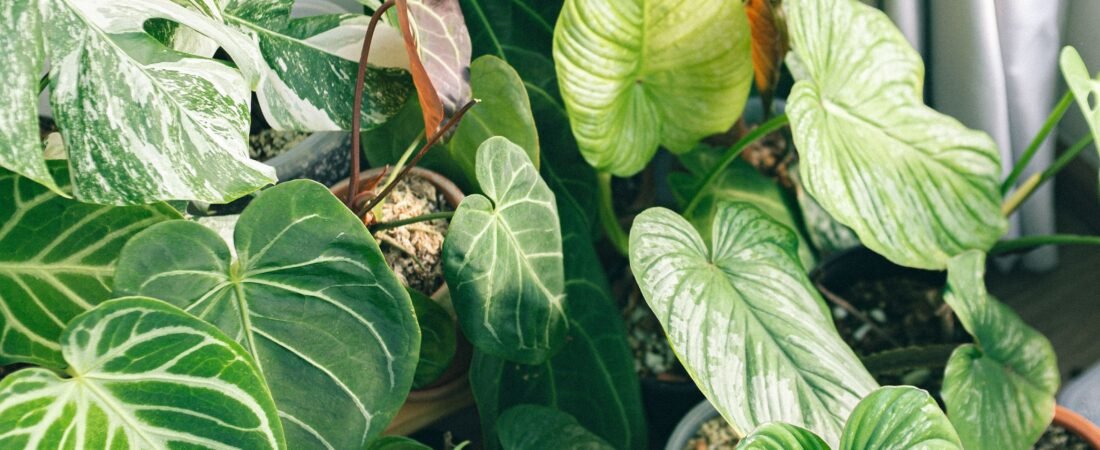
A shelf, a strip of floor beside the sofa and a sunny windowsill can all hold a houseplant, but they suit quite different kinds. These five choices cover trailing vines, upright foliage, arching leaves and compact succulents. Choose the one that fits your light and the way you use the room.
Image disclosure: Some images in this article are AI-generated illustrations used to show plant placement ideas. Actual plants and apartment conditions may look different.
Start with the space the leaves will occupy
Set an empty pot where you would like to grow something and use the room normally for a day. Can you still open the blind, reach your keyboard or pull out the chair? A pot may fit perfectly while the mature foliage does not. An upright plant can make sense beside a narrow bookcase, whereas an arching plant needs clear space on both sides. For a hanging plant, check whether you can reach the growing mix and take the pot down to drain without tugging on its stems.
Five plants for five different apartment spots
Start with the spot you can offer and work down the list. A sunny sill calls for a different plant from a shelf that receives gentle indirect light. Two plants can tolerate similar light yet need different watering routines or clearances around the pot. The descriptions below give the mature shape and the feature that makes each plant useful in a small home. If more than one sounds suitable, let your watering habits and any pets that can reach the leaves help you make the final choice.
1. Pothos — Best for Hanging Baskets
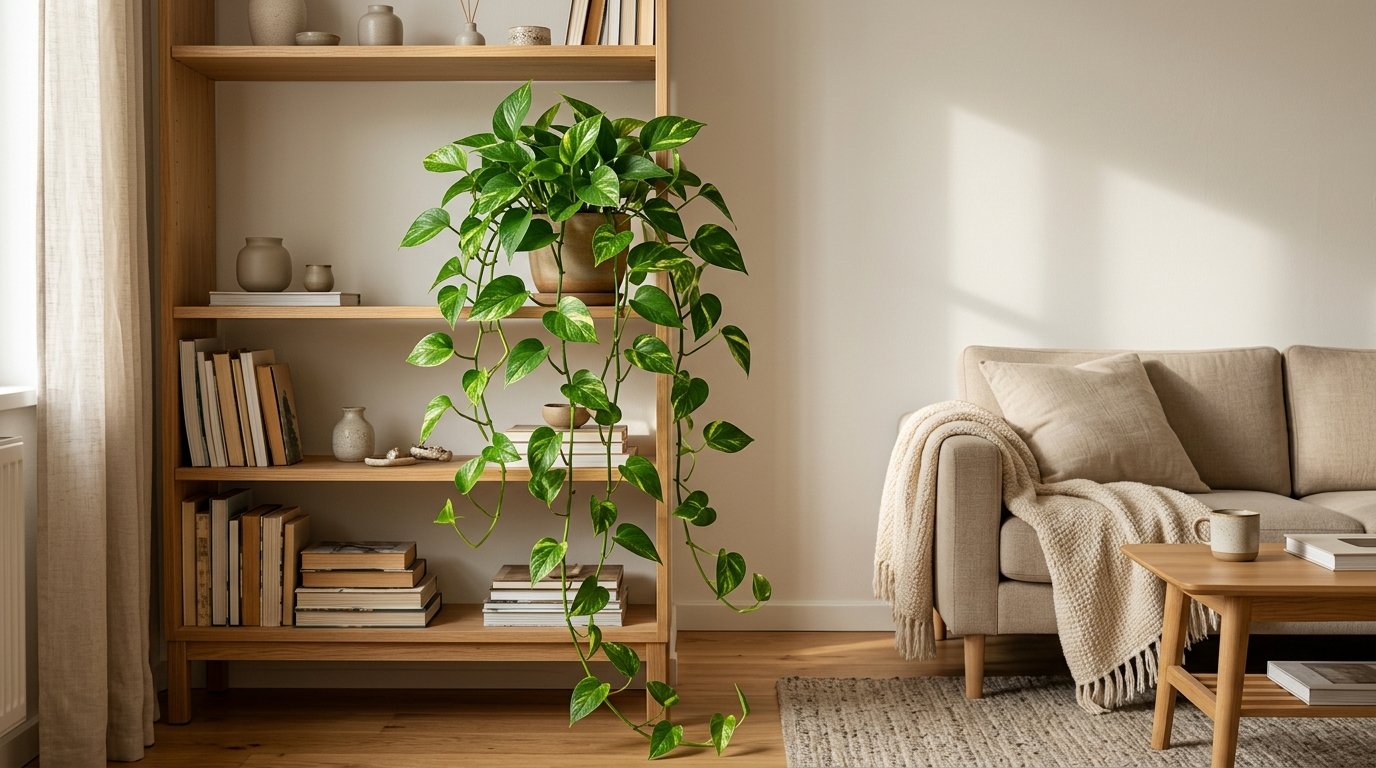
Pothos (Epipremnum aureum) is one of the easiest indoor plants for small spaces because of its adaptable growth habit and attractive trailing leaves.
Its heart-shaped foliage can create a beautiful display on a bookshelf, wall-mounted planter, or hanging basket.
Golden pothos generally grows best in medium to bright indirect light, although it can tolerate lower-light conditions. Growth may slow when natural light is limited.
Light: Medium to bright indirect sunlight.
Watering: Water when the upper part of the potting mix begins to dry.
Best location: Hanging baskets, elevated shelves, or plant stands.
Beginner tip: Trim long vines occasionally to keep your plant compact and encourage fuller growth.
Pet safety: Pothos is toxic to cats and dogs if eaten, so keep it away from pets.
2. Snake Plant — Best for Narrow Corners
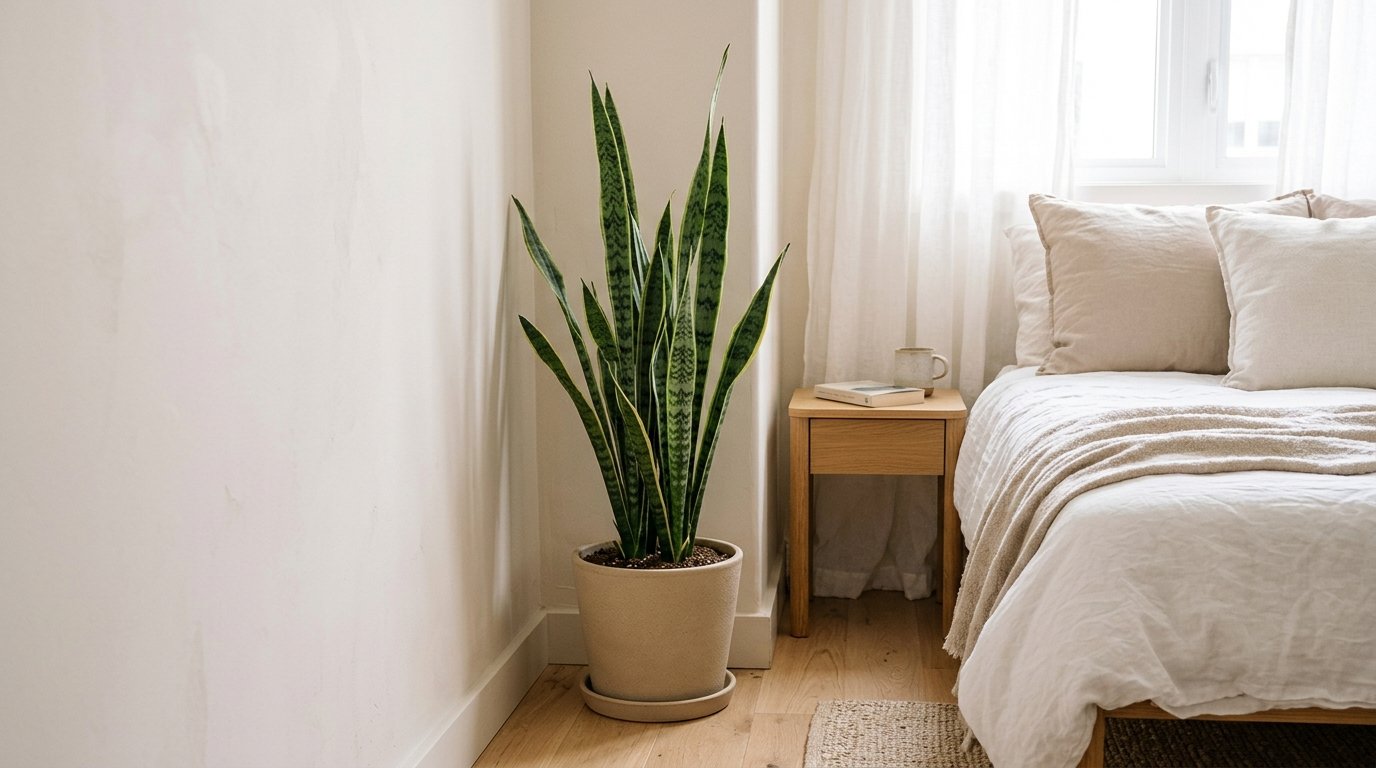
Snake plants (Dracaena trifasciata) are excellent choices for small apartments because their leaves grow upright rather than spreading widely.
Their tall, architectural foliage looks attractive beside a desk, near a sofa, or in a narrow corner.
Snake plants prefer bright indirect light but can tolerate lower-light conditions.
They store moisture in their thick leaves and are more sensitive to overwatering than to occasional dry periods.
Light: Bright indirect light, with some tolerance for lower light.
Watering: Let the potting mix dry thoroughly before watering again.
Best location: Narrow corners, bedrooms, and home offices with natural light.
Beginner tip: Use a pot with drainage holes to help prevent soggy roots.
Pet safety: Snake plants are toxic to cats and dogs if ingested.
3. Spider Plant — Best for Beginners with Pets
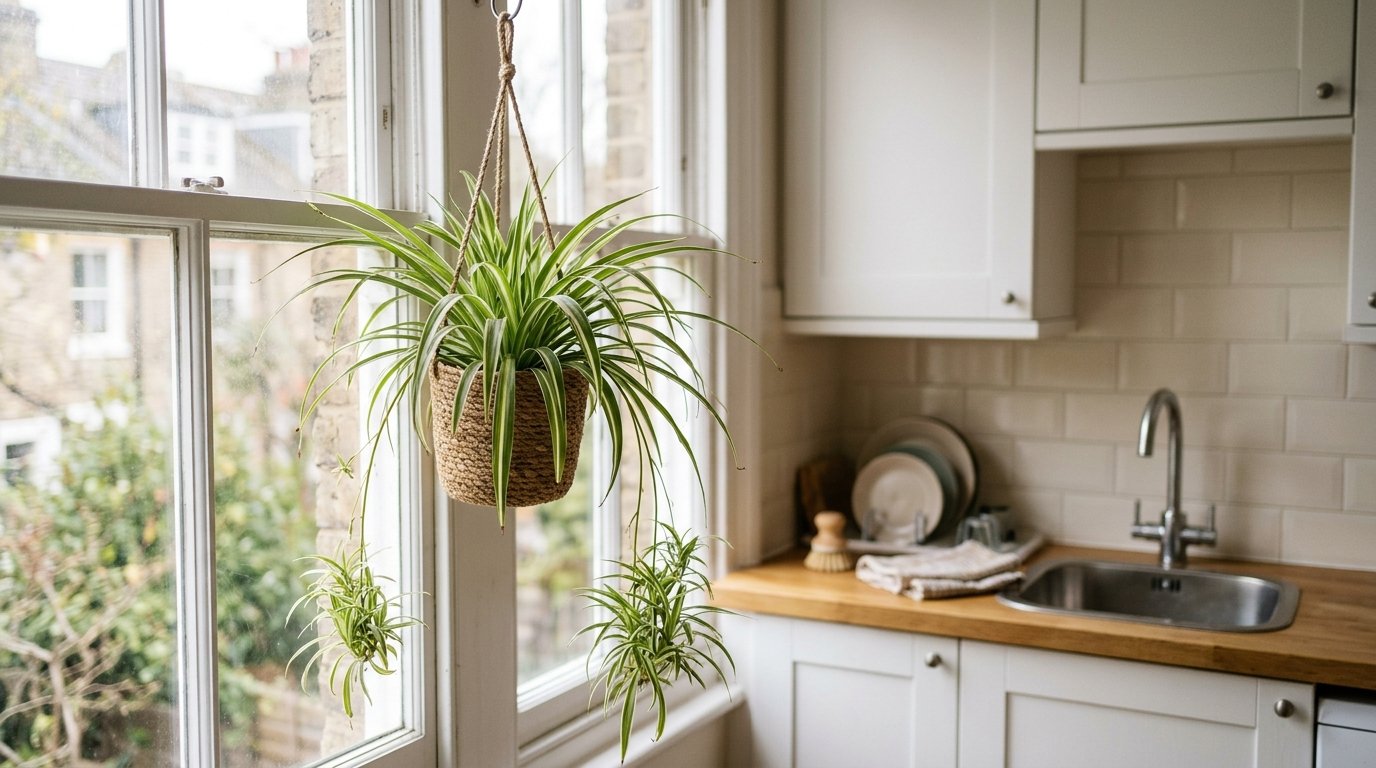
Spider plants (Chlorophytum comosum) have long, arching green leaves, often with cream-coloured stripes.
Their graceful shape makes them suitable for hanging baskets, shelves, and small plant stands.
Healthy spider plants may eventually produce small baby plants that hang from long stems. These plantlets can often be propagated to create new plants.
Light: Bright indirect light.
Watering: Water when the top layer of potting mix begins to dry. Avoid leaving the roots sitting in water.
Best location: Bright living rooms, shelves, and hanging planters.
Beginner tip: Trim damaged or brown leaf tips if needed, and keep the plant away from harsh direct sun.
Pet safety: The ASPCA lists spider plants as non-toxic to cats and dogs.
4. ZZ Plant — Best for Busy People
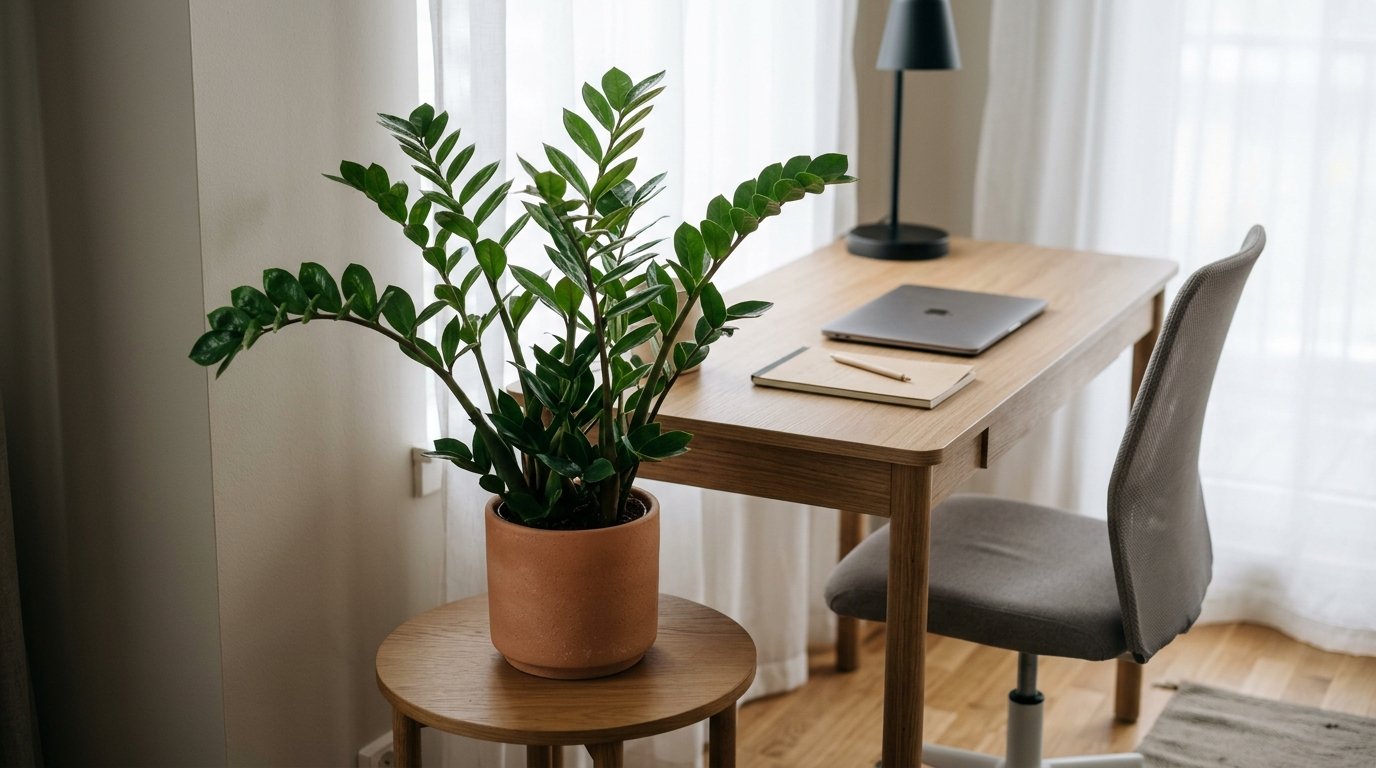
The ZZ plant (Zamioculcas zamiifolia) is a practical choice for people who want a modern-looking indoor plant without a demanding watering routine.
Its glossy, dark green leaves grow along upright stems, creating a neat appearance that works well in contemporary apartments.
ZZ plants can tolerate lower light and less frequent watering. However, they still need some light to remain healthy.
Light: Low to bright indirect light.
Watering: Allow the potting mix to dry between waterings.
Best location: Home offices, side tables, and apartment corners with indirect natural light.
Beginner tip: Avoid watering on a fixed weekly schedule. Check the soil first.
Pet safety: ZZ plants are toxic to cats and dogs if eaten.
5. Small Succulents — Best for Sunny Windowsills
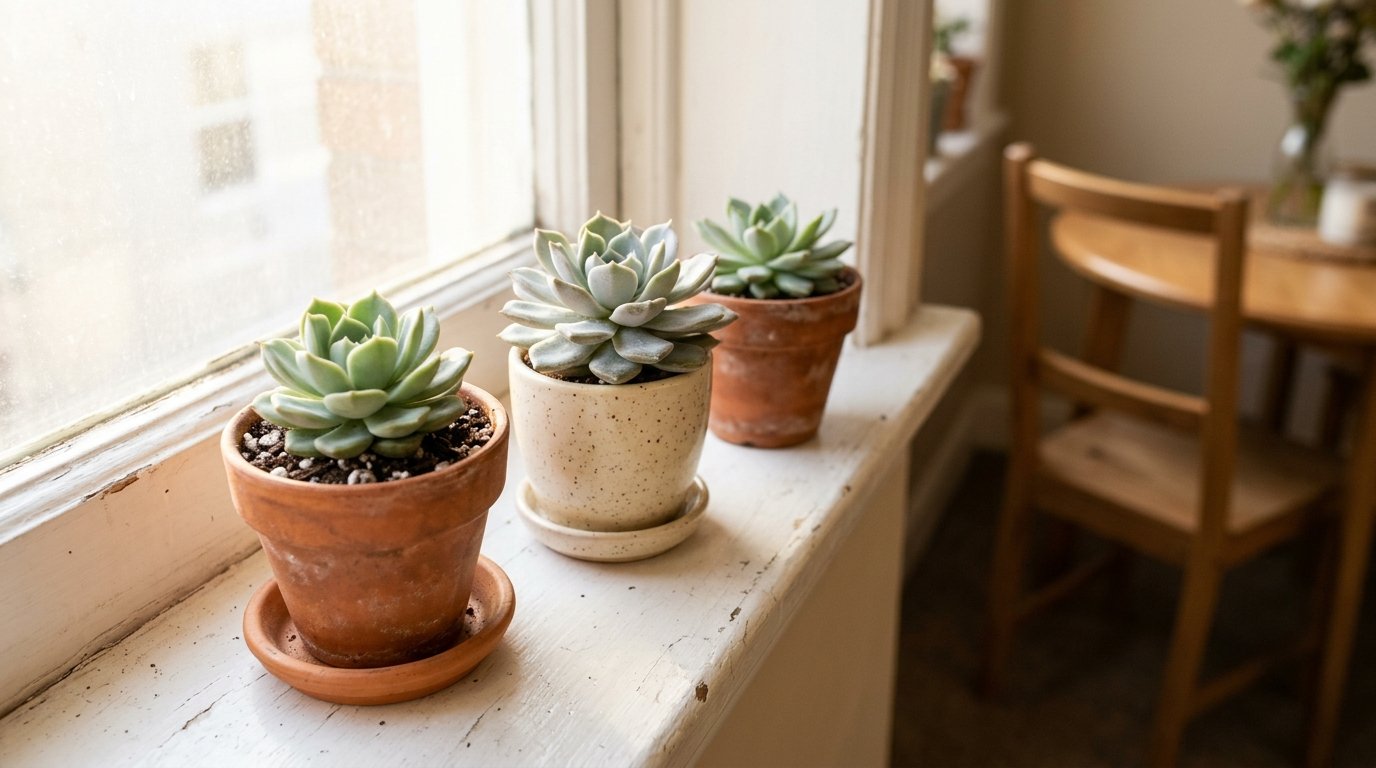
Small succulents are a good option for apartment residents who have limited floor space but access to a sunny window.
Many varieties have thick leaves that store water, allowing them to tolerate relatively dry conditions.
Compact succulents can create attractive arrangements on windowsills, desks, and small shelves.
However, not every succulent has the same light requirements or mature size. Choose a variety suited to indoor growing.
Light: Most common succulents prefer abundant natural light.
Watering: Allow the soil to dry between waterings; exact requirements vary by species.
Best location: Bright windowsills and sunny shelves.
Beginner tip: Use a well-draining potting mix designed for cacti and succulents.
Pet safety: Some succulents are toxic to pets. Check the exact species before purchasing.
For more detailed growing advice, see the University of Minnesota Extension guide to cacti and succulents.
Match the shortlist to your window and routine
Observe the actual planting position in the morning and again later in the day. A sunny patch on the floor may pass below a high shelf, while a tree outside can shade an otherwise promising window. Note whether sunlight touches the leaves directly, how long it lasts and whether you normally close the curtains during that period. Then ask who will check the pot when you are busy or travelling. If the chosen spot cannot be reached easily with a watering can, change the position before changing the plant.
Check Your Available Sunlight
Different plants require different amounts of light.
In the Northern Hemisphere, a sunny south-facing window may provide suitable growing conditions for many succulents, while pothos and ZZ plants may tolerate less intense lighting.
Remember that low-light tolerance does not mean plants can grow indefinitely in complete darkness.
If your apartment receives very little natural daylight, an appropriate indoor grow light may help.
Consider the Available Space
Choose plants that fit your room, including their expected mature size.
Trailing plants work well on elevated shelves, while upright varieties can fill narrow corners without taking up much floor space.
Avoid overcrowding your plants, as this can make watering, cleaning, and routine care more difficult.
Think About Your Daily Routine
If you frequently travel or work long hours, choose plants that tolerate drying between waterings.
If you enjoy checking soil moisture and tending to your plants regularly, you may prefer spider plants or other varieties that need more consistent attention.
The best houseplant is one that suits both your home and your lifestyle.
Five care habits that fit a small home
Keep the nursery label and learn how the same pot feels at two points: shortly after watering and drainage, and again when the species is ready for another drink. This is more useful than comparing the weight of two different pots. A succulent on a bright sill and a spider plant near a window can dry at different rates even if you watered them together last time. Include the saucer in your check. A dry shelf tells you nothing about water trapped inside a decorative cover.
1. Check the Soil Before Watering
Overwatering is a common problem for beginner gardeners.
Before adding water, check the soil moisture. Some plants prefer slightly moist soil, while snake plants, ZZ plants, and many succulents need more drying time.
Choose pots with drainage holes and empty excess water from saucers.
2. Choose Suitable Pot Sizes
A very large container can retain more moisture than a small root system needs.
Select a pot appropriate for the plant’s current size and repot when the roots require more room.
Avoid choosing oversized decorative planters simply because they look attractive.
3. Keep Leaves Clean
Dust can collect on houseplant leaves over time.
Gently wipe larger leaves with a soft, damp cloth to keep them clean. Avoid using harsh cleaning products.
Regularly checking leaves also helps you notice early signs of pests or damage.
4. Adjust Care When Winter Light Changes
Shorter daylight hours and indoor heating can affect plant growth during winter.
Keep sensitive plants away from cold drafts, freezing window glass, and hot heating vents.
Many plants grow more slowly in winter, so their watering needs may change.
5. Make Use of Vertical Space
If floor space is limited, consider sturdy plant shelves, wall-mounted planters, or securely installed hanging baskets.
Keep heavier containers on stable lower shelves and avoid placing pots where they might fall.
Vertical gardening can make an apartment feel greener without crowding the room.
Check each species before bringing it home to a pet
Of the five choices here, the common spider plant is listed as non-toxic to cats and dogs. Pothos, snake plants and ZZ plants can harm pets that chew them. The word succulent describes a large group and does not tell you whether an individual species is suitable. Use the scientific name on the nursery tag to check the ASPCA Toxic and Non-Toxic Plants Database. Consider falling leaves, dangling stems and the furniture a climbing cat can reach. If a pet may have eaten a toxic or unidentified plant, contact a veterinarian promptly with the name or a clear photograph.
Work through common placement and watering decisions
If you have only a dim corner, do a daylight check before choosing a low-light plant. Pothos and ZZ plants can tolerate modest light, but neither can grow indefinitely in darkness. Move the proposed position nearer a window or provide suitable plant lighting. If you have enough light but very little floor space, a stable stand or shelf can work as long as the plant can be reached for care. If your main concern is watering while away, choose for the usual drying pattern of your home as well as the plant’s reputation.
Make a shopping note for one specific plant
Take the inside diameter of your cover pot or the depth of your sill with you when you shop. Look for the scientific name, the likely mature size and a healthy plant that already fits your light conditions. Inspect stems and leaf undersides before paying. If you want a succulent, choose a named species so you can check both light needs and suitability around pets. If you want pothos, allow for the hanging vine as well as the pot. Buying one suitable plant leaves room to see how the spot works through a change of season.
Follow the first month of growth
On the day the plant arrives, take a picture of its newest leaf or growing tip and note where the pot stands. For the next few weeks, check the mix and record when you actually water. A plant that stays damp for much longer than expected may need its drainage or position reviewed. If new growth stays healthy and you can manage the watering easily, the same setup may suit another plant with similar needs. For further help choosing and caring for the next one, see the Indoor Plants guides and Plant Care resources.