
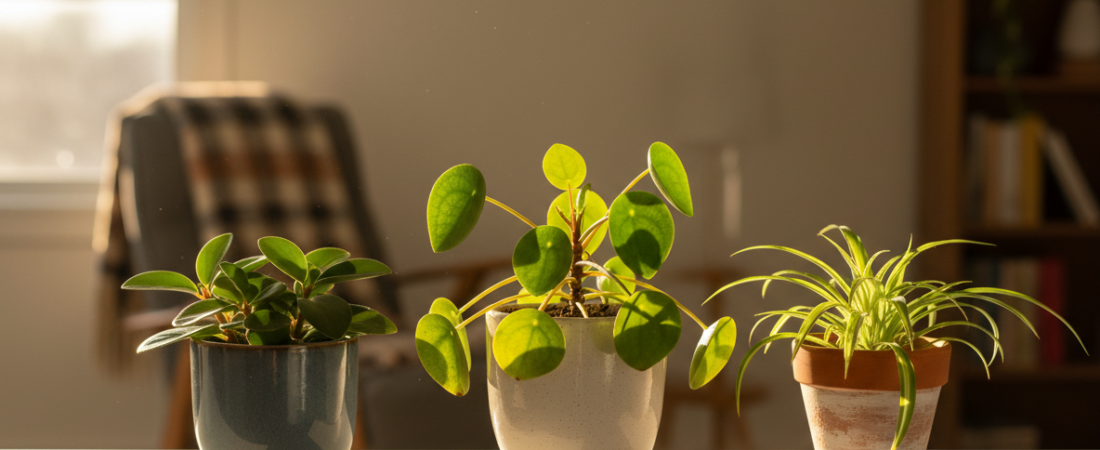
East-facing windows often provide gentle morning sun and softer afternoon light, making them useful for a wide range of compact houseplants.
Before you begin
Observe how many hours sunlight enters the room and whether nearby buildings shade the glass. Check conditions over several days rather than relying on the compass direction alone.
Practical steps for a small space
1. Match plants to morning light
Spider plants, peperomias, hoyas and many philodendrons often enjoy bright light without fierce afternoon sun. Check each plant’s species-level requirements before placing it.
2. Avoid crowding the glass
Give leaves space for air circulation and do not let them press against cold winter windows. A slim shelf next to the window can be easier to manage than a packed sill.
3. Protect tender leaves
Even morning sun can scorch a plant moved abruptly from a dim shop. Increase exposure gradually and use a sheer curtain if leaves bleach or crisp.
4. Check growth patterns
Compact leaves and steady new shoots suggest adequate light. Long, leaning stems may mean the pot needs to move closer or receive supplemental illumination.
5. Adjust care with the season
Winter days are shorter and lower in intensity. Reduce watering when growth slows and move frost-sensitive pots away from cold glass at night.
Common mistake to avoid
Do not assume every east-facing window has the same light: awnings, buildings, trees and season can make a dramatic difference.
A simple plan for this week
This week’s east-window experiment: mark where the first direct morning sun reaches the sill and how far it extends into the room. Place one suitable houseplant near the window without letting leaves touch cold glass. Record its potting-mix moisture and any leaning or pale growth, then compare your notes after two weeks. If a plant on a distant shelf stretches, improve its light before buying fertilizer or replacing the pot.
East-facing windows: choosing a plant by distance from the glass
East-facing windows often provide gentler morning sunshine, but nearby buildings, balcony roofs and the time of year can change the brightness substantially. A windowsill with a few hours of sun may support very different plants from a shelf across the room.
Measure the space and check morning light before choosing a plant; avoid buying solely from a general “east window” list.
- Near the glass: plants able to accept some soft direct sun may do well; protect cold-sensitive foliage from touching winter glass.
- Just off the windowsill: many tropical foliage plants prefer bright indirect light, especially if the morning sun is intense through the particular window.
- Farther indoors: light can fall quickly with distance; use actual observation and plant response rather than assuming the whole room is equally bright.
- Summer heat: windows can still overheat small pots. Watch moisture and leaf bleaching during prolonged hot weather.
- Winter daylight: expect shorter days and slower growth; reassess watering rather than automatically increasing fertilizer.
Example: compare how a pothos and a small herb respond in separate pots near the same window. The herb may need more light and a different watering routine. See pothos care and sunny windowsill plants for more targeted placement ideas.
Frequently asked question
Is east-facing light indirect?
It often includes some direct morning sun, followed by indirect light later in the day.
Keep learning
Explore our Indoor Plants collection and the 10 Best Indoor Plants for Small Apartments guide for more ideas. For general plant placement and care, see Oregon State University Extension.