
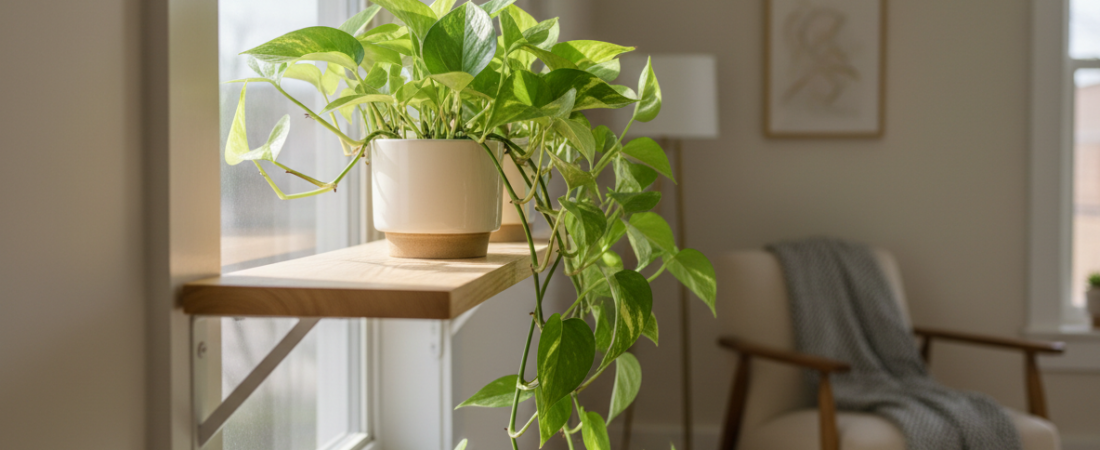
Pothos is popular in small apartments because its trailing vines can fit on a shelf, cabinet or hanging planter. Healthy growth depends more on light and watering than on expensive accessories.
Before you begin
Choose a nursery pot with a drainage hole and a location with bright indirect light. Pothos tolerates dimmer positions but may grow more slowly or lose variegation.
Practical steps for a small space
1. Find a practical display spot
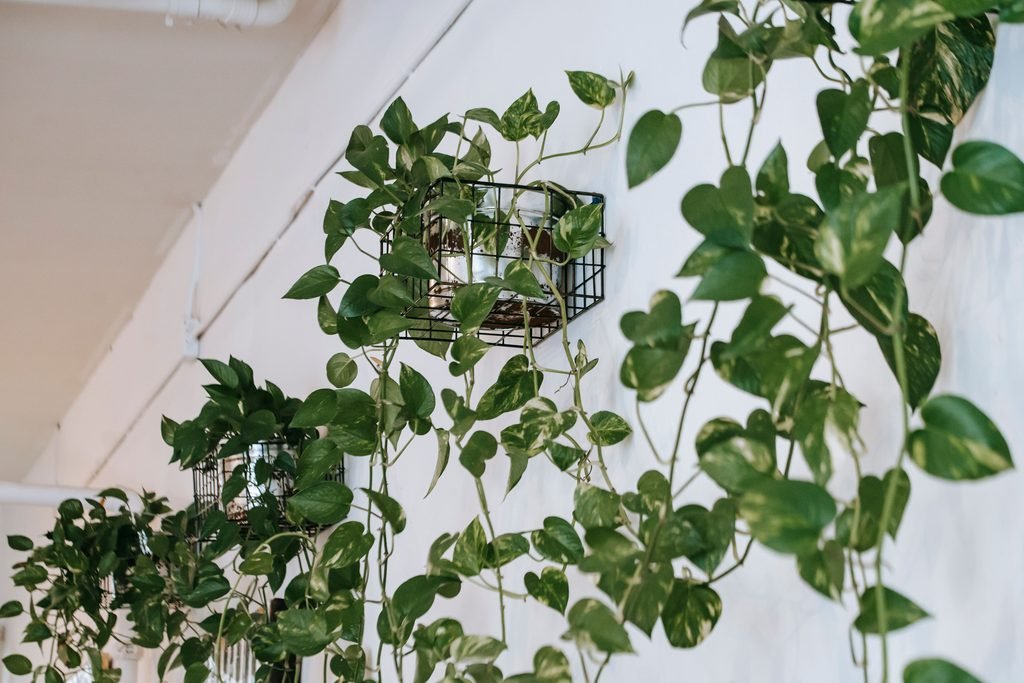
Allow vines room to trail without blocking doors or snagging on furniture. Avoid placing a heavy hanging pot over a bed or a frequently used walkway.
2. Check soil before watering
Feel the upper layer of mix and lift the pot to judge its weight. Water thoroughly when appropriate, then allow excess water to escape instead of leaving roots submerged.
3. Trim rather than crowd
Cut just above a node to manage long vines. Clean pruning tools first; a cutting with a node can be rooted in water or a suitable propagation medium.
4. Watch leaf signals
Yellowing may follow overwatering, while curling or wilt can indicate dry roots. Inspect the soil before diagnosing symptoms because different problems can look alike.
5. Keep leaves clean
Gently wipe dusty leaves with a damp cloth. Avoid leaf-shine products and keep the plant away from heater blasts or cold drafts.
Common mistake to avoid
Pothos contains irritating calcium oxalate crystals and is toxic to pets if chewed. Choose a genuinely pet-safer species if pets can reach your plants.
A simple plan for this week
This week’s pothos task: inspect the vine for firm stems, healthy nodes and any stretched gaps between leaves. Move the plant toward appropriate indirect light if growth is sparse, then check potting-mix moisture before watering over a sink. If you want a fuller pot, take one healthy node cutting with clean scissors and track rooting before transferring it to a draining container. Keep pothos away from pets that might chew it.
Pothos troubleshooting for a small apartment
Pothos is forgiving, but its trailing stems still need light, drainage and periodic checking. Golden and variegated cultivars may lose colour contrast in dim conditions; stretched spacing between leaves often suggests a placement problem.
Use a draining pot and assess the mix before watering. If the plant lives high on a shelf, protect furniture by watering over a sink and returning it only after excess water has drained.
- Long stems with sparse leaves: review light first, then prune a healthy vine above a node to encourage a fuller look over time.
- Yellowing leaves: compare the potting mix and recent watering. Soggy roots, drought and old-leaf aging can cause different patterns.
- Propagation: take a healthy cutting containing at least one node; roots develop at nodes, not randomly from a leaf blade.
- Training: a safe trellis or pole can guide stems upward, but don’t attach vines to painted walls or furniture that may be damaged.
- Pet safety: pothos is toxic if chewed by cats and dogs. Keep it out of access and consult a veterinarian if ingestion occurs.
Care habit: once a week, lift the pot if safe, test the mix and inspect the backs of a few leaves. This prevents a high shelf from becoming an overlooked watering or pest problem. More detail in water propagation basics and yellow leaf diagnosis.
Frequently asked question
Can pothos grow in water forever?
Cuttings can root in water, but long-term water culture needs nutrient management and regular water changes.
Keep learning
Explore our Indoor Plants collection and the 10 Best Indoor Plants for Small Apartments guide for more ideas. For general plant placement and care, see Oregon State University Extension.