

Affiliate disclosure: As an Amazon Associate I earn from qualifying purchases. This article contains affiliate links. We may earn a commission at no extra cost to you. Product availability and delivery may vary by location. We have not personally tested these products.
Winter can be a difficult season for houseplants, especially when you live in an apartment where the heating stays on for much of the day. The temperature may feel comfortable to you, but the air around a tropical plant can become much drier than it was during summer. You might notice crispy leaf edges, curled foliage or flower buds that dry before opening. These symptoms are worth investigating, rather than immediately reaching for the watering can. Sometimes the problem is the air surrounding the plant, not the amount of water in its pot.
The good news is that you do not need to turn your living room into a greenhouse to make winter a little easier for your plants. A few practical changes can help, and some do not require buying anything. The important thing is to match the solution to your plants and the conditions in your home. Too much indoor moisture can also lead to condensation and mould, particularly in a cold climate. Here are six ways to increase humidity for houseplants in winter, along with the limitations of each approach.
Image disclosure: The editorial plant and interior illustrations in this article are AI-generated for visual inspiration. Product images are separate.
1. Measure the humidity before changing anything

Before buying a humidifier or making room for a new plant setup, find out how dry your apartment actually is. A small digital hygrometer measures relative humidity, usually shown as a percentage, and many models also display the temperature. Set it near the leaves of the plants you are concerned about, rather than next to a radiator, a steamy kettle or a humidifier outlet. Give the device time to settle and compare the readings at different times of the day. The information may surprise you.
Relative humidity describes how much moisture is in the air compared with how much it could hold at the same temperature. When cold outdoor air is brought inside and heated, its relative humidity generally falls unless additional moisture is introduced. Many familiar tropical houseplants appreciate moderate humidity, but a cactus or a jade plant does not need the same conditions as a small fern. Even two shelves in the same apartment may have quite different temperatures, daylight and air movement.
Health Canada recommends keeping household relative humidity between 30 and 50 percent to help manage moisture and mould. In very cold weather, the appropriate level may be nearer the lower end of that range, depending on how well the building handles condensation. Do not aim for extremely high humidity throughout a room just because a particular tropical species prefers it. If you see wet windows or damp walls, avoid increasing moisture further. A plant enclosure may be a better choice for a species with higher humidity needs. A simple notebook of readings and observations can help you decide whether anything needs to change.
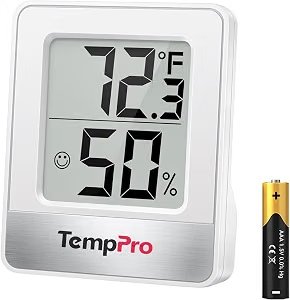
TempPro TP49 Digital Hygrometer (formerly ThermoPro)
A compact digital temperature and humidity monitor with an easy-to-read display. Place it near your plants to check whether additional moisture is needed.
Affiliate link. Check Amazon.ca for current availability and delivery options.
2. Use a small humidifier near moisture-loving plants

If your hygrometer consistently shows dry air and your plants are struggling, a portable humidifier is generally the most effective way to add moisture to their surroundings. This does not necessarily mean buying the largest machine available. In a compact apartment, a suitably sized unit near a group of ferns, prayer plants or other moisture-loving species may be enough. Put it on a stable, water-resistant surface where you can easily reach it for refilling and cleaning, following any clearances in its instructions.
Position the device so that mist is not continuously directed at foliage, furniture, curtains, electrical outlets or walls. The goal is to improve the moisture level in the air, not to keep everything nearby wet. Use your hygrometer to guide when to run the humidifier and reassess the reading after adjusting its output. If you are already seeing condensation on cold windows, lower the output or stop using it. It is perfectly reasonable to choose a lower-humidity plant if increasing room moisture is unsuitable for your home.
Maintenance is just as important as choosing the right capacity. Empty and refill the tank regularly, clean the unit according to the manufacturer’s instructions and use the type of water recommended for the model. The US Environmental Protection Agency advises emptying portable humidifier tanks daily and cleaning them every third day; low-mineral water can reduce mineral buildup and airborne mineral dust in some units. Do not add essential oils or other substances unless the device is specifically designed for them. A humidifier should make plant care easier, not create a damp patch that you constantly need to wipe away.
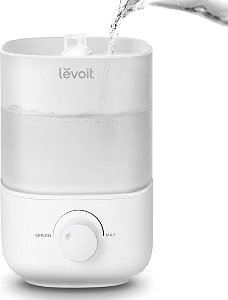
LEVOIT Classic 160 Cool-Mist Humidifier (2.5 L)
A top-fill humidifier with adjustable mist output. Use alongside a hygrometer, keep the mist away from wettable surfaces and clean the unit regularly.
Affiliate link. Check Amazon.ca for current availability and delivery options.
3. Create a tiny humid environment with a glass terrarium

When only one or two plants need more humidity, it may make more sense to create a small protected environment for them rather than changing the air in your entire apartment. A glass terrarium or cloche can slow the escape of moisture from the plant and growing medium. A clear container also lets you enjoy the foliage while taking up relatively little shelf space. Consider miniature ferns, fittonia or other compact plants suited to moist, enclosed conditions. Choose species with similar requirements if you want to grow more than one together.
Start with a clean glass container, suitable growing medium and a plant small enough to have room around its leaves. Closed containers hold moisture more efficiently than open ones, so they generally need less frequent watering. Add water sparingly rather than soaking the soil every time you check on the plant. A little condensation may appear on the glass as the temperature changes, but persistent heavy droplets and soggy soil are signs that the setup may be too wet. Ventilate the container when necessary and remove dead foliage promptly.
Keep the enclosure in bright, indirect light. Direct sun through glass can rapidly raise the temperature inside, even during winter, and damage delicate foliage. Do not put desert cacti or other dry-loving succulents in a closed, continuously humid container. This method works best when you deliberately select plants that enjoy those conditions. If an established houseplant is too large, a terrarium is not worth forcing it into an unsuitable container. Instead, try grouping plants or finding a more sheltered location.
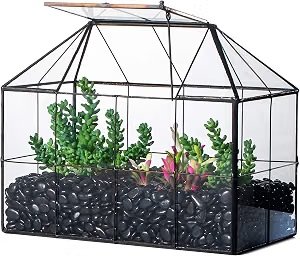
NCYP Geometric Glass Terrarium
A compact glass enclosure with a black metal frame for a small moisture-loving plant arrangement. Plants are not included; check ventilation and protect furniture from leaks.
Affiliate link. Check Amazon.ca for current availability and delivery options.
4. Group houseplants together without overcrowding them
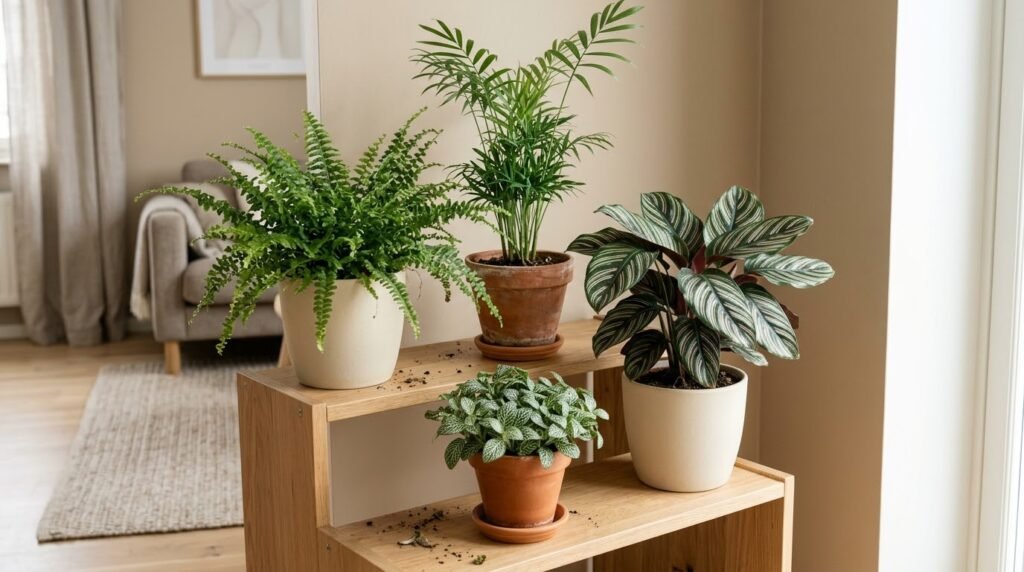
One of the simplest ways to help several plants through winter is to arrange them together. Plants release moisture through their leaves, and moisture also evaporates from the growing medium after watering. A group of plants may create a slightly more humid zone immediately around the foliage, especially when they are close enough to share an area without being squeezed tightly together. It is a modest, inexpensive approach that can also turn an otherwise unused corner into a pleasant indoor garden.
Look for a bright spot with enough space for three or four pots. Arrange the largest plants at the back or on a lower surface and smaller plants where they will still receive light. Group species with compatible needs instead of putting every plant you own into the same corner. A fern and a fittonia might benefit from similar surroundings, while a succulent that needs strong light and dry conditions may be happier elsewhere. Make sure you can reach each pot to check the soil and remove it for watering.
Grouping does not automatically raise the humidity of an entire room. The benefit depends on the number and size of the plants, nearby airflow and room dimensions. Leave gaps between leaves so air can circulate, and check for pests before placing a new plant among the others. If one develops a pest problem, separate it as appropriate rather than allowing insects to spread easily across the collection. Use a hygrometer near the group to see whether the change makes a measurable difference. This is an especially useful first experiment if you prefer not to purchase equipment.
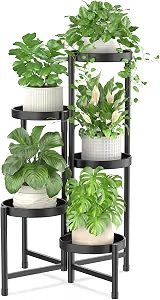
iDavosic.ly Five-Tier Metal Plant Stand
A vertical five-tier stand for grouping several small pots without taking up much floor space. Check tray size, stability, load limits and available light before arranging plants.
Affiliate link. Check Amazon.ca for current availability and delivery options.
5. Try a pebble tray, but know its limits
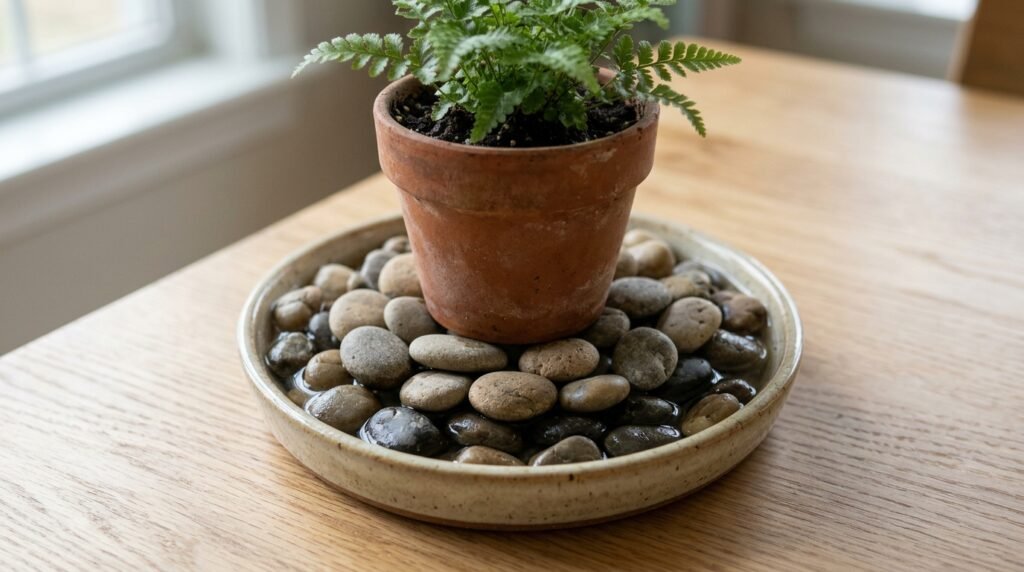
A pebble tray is often suggested as an easy winter plant-care trick. You can make one with a waterproof saucer, clean stones and a little water. Spread the stones across the tray in a stable layer and set a suitable plant pot on top. Add water below the tops of the pebbles so the base of the pot stays above the waterline. This arrangement allows water to evaporate without leaving the plant’s roots in a permanently wet container.
The effect is usually modest. Although the water evaporates, the added moisture disperses into the surrounding air. Iowa State University Extension includes pebble trays among methods worth trying, while Penn State Extension notes that the moisture may have very little impact on overall humidity. Both points are useful for a small apartment: a tray can be a low-cost supplementary measure, but it should not be expected to rescue a plant that needs substantially more moisture in a very dry room.
Use a sturdy tray that fits the pot and cannot easily tip or overflow. Protect wooden furniture with an appropriate waterproof barrier, clean the tray and stones regularly, and do not allow water to become stagnant. Refill only as needed and keep the setup away from electrical equipment. If you already own a suitable saucer and a few clean pebbles, there is little reason to purchase an elaborate kit just to try this idea. Give the tray a fair test using your hygrometer, and switch to a more effective approach if it makes no useful difference.
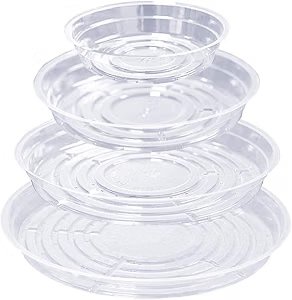
CAROSE Clear Plastic Plant Saucers (24-Pack)
Clear saucers in several sizes for making a simple pebble tray. Choose a stable saucer with enough depth and keep the bottom of the pot above the waterline.
Affiliate link. Check Amazon.ca for current availability and delivery options.
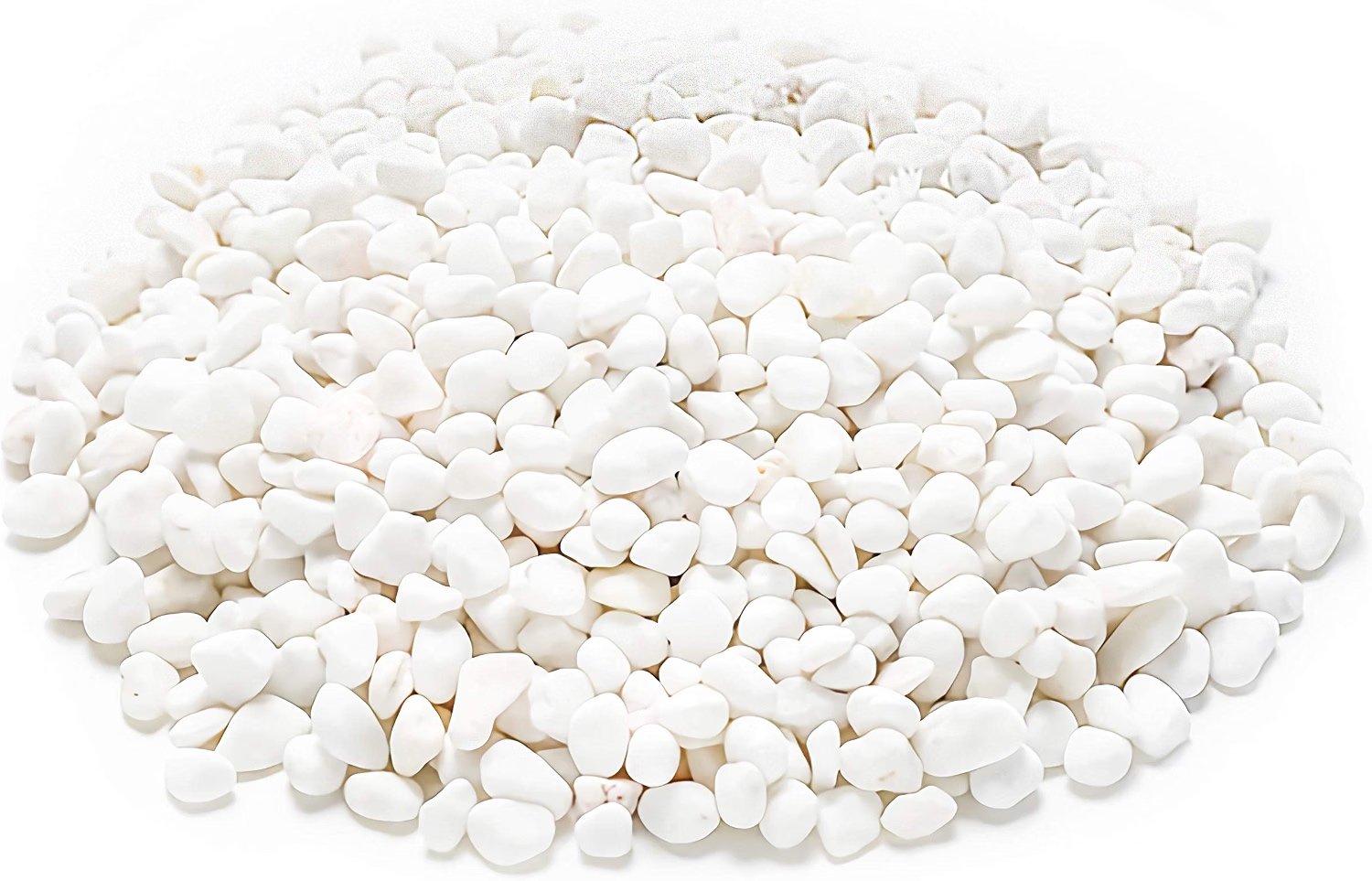
WUWEOT White Decorative Pebbles
Small decorative stones for a DIY humidity tray. Rinse before use and use a stable layer deep enough to keep the pot above the water. A pebble tray is supplementary, not a substitute for a humidifier.
Affiliate link. Check Amazon.ca for current availability and delivery options.
6. Keep plants away from heaters and stop relying on misting

Sometimes the easiest improvement is not adding more moisture at all, but changing where the plant sits. A shelf above a heating vent may have much drier moving air than another position in the same room. Radiators, forced-air registers and drafty doors can also expose leaves to uncomfortable temperature changes. Look around your apartment for a location with similar daylight but less direct heat or cold airflow. A modest move can make the surroundings more stable without introducing additional equipment.
Many people mist their plants because a spray bottle feels like an easy way to increase humidity. The problem is that the change in humidity usually lasts only briefly while the droplets evaporate. Regular misting is therefore not a reliable substitute for a humidifier or an enclosed growing environment, and persistent wet foliage can contribute to disease in some conditions. There are exceptions for species with specific watering requirements, such as certain air plants, but everyday misting of ordinary houseplant leaves should not be treated as a general solution.
Finally, remember that dry air and dry potting mix are not the same problem. Extra watering does not correct low room humidity if the roots are already moist. Brown leaf edges can also result from fertiliser salts, inconsistent watering, unsuitable light or other stresses. Check the growing medium and the overall condition of the plant before making changes. Give new growth a chance to develop under improved conditions, because old brown leaf tips will not turn green again. Keep the apartment ventilated, protect the plants from direct drafts and choose species suited to your home if high humidity is impractical.
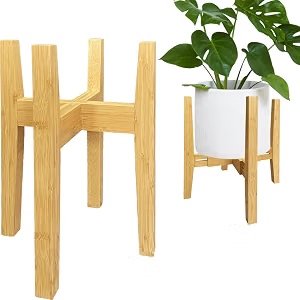
MinBoo Adjustable Bamboo Plant Stand
A freestanding adjustable single-pot stand for repositioning a plant away from direct heating airflow. Check the pot diameter and weight before use. Plant and pot are not included.
Affiliate link. Check Amazon.ca for current availability and delivery options.
The best winter humidity routine is the one that works for your actual apartment. Start by measuring the air and moving any plants that are receiving direct heat. For a few sensitive plants, consider a glass enclosure or a small humidifier used responsibly. Grouping pots can be a helpful addition, and a pebble tray is an inexpensive experiment, but neither is a guaranteed solution. If your home develops condensation, reduce moisture rather than chasing a tropical humidity target. You can have a healthy, attractive indoor garden without sacrificing the comfort of the room you live in.
For related advice, read our winter houseplant care guide, guide to brown leaf tips and Christmas plants for small apartments. Further reading: Iowa State University Extension, Penn State Extension, University of New Hampshire Extension, EPA humidifier care and Health Canada indoor moisture guidance.