

Affiliate disclosure: As an Amazon Associate I earn from qualifying purchases. This article contains affiliate links. We may earn a commission at no extra cost to you. Product availability and delivery may vary by location. We have not personally tested these products.
Decorating for Christmas in a small apartment does not have to mean filling every corner with ornaments. A full-size tree may take over the living room, while boxes of decorations can be difficult to store in January. A few carefully chosen Christmas plants offer a simpler alternative. They bring festive colour and a bit of nature to a windowsill, side table or narrow shelf, and several of them can continue growing long after the holiday season ends.
Before buying a plant, take a look at the daylight in your home and decide where you can realistically water it. Cold window glass, heating vents and dry air can affect indoor plants during winter. Choose healthy specimens with firm stems and pots that drain properly. If you have cats or dogs, check the exact species for toxicity. These six Christmas plants for small apartments combine attractive seasonal displays with practical advice on keeping them healthy beyond the holidays.
Image disclosure: The editorial plant and interior illustrations in this article are AI-generated for visual inspiration. Product images are separate.
1. Mini poinsettias for a classic Christmas look

Nothing says Christmas quite like a bright red poinsettia. You do not need a large plant to enjoy its traditional festive colours, especially if you live in an apartment. Try two miniature poinsettias in simple pots on a narrow table, or keep one beside a bright window. White, pink and cream varieties are also attractive if you prefer a softer decorating style. A small grouping can look intentional without taking up the space you need for everyday meals or working from home.
The showy red parts are actually modified leaves known as bracts. To keep them looking good, choose a bright location with a comfortable indoor temperature. Avoid placing the leaves against icy glass or directly above a heater. Check the surface of the potting mix and water thoroughly when it begins to dry, letting excess moisture escape before returning the plant to its decorative container. Remove any foil wrapping that prevents drainage. A simple ceramic pot cover and saucer can make regular maintenance much easier.
Rather than throwing a healthy poinsettia away after Christmas, try keeping it as a houseplant. Getting the bracts to turn red again is possible but takes patience, including a consistent period of uninterrupted darkness each night during autumn. If you are looking for a plant that usually needs less effort to flower again, consider a holiday cactus instead. Poinsettia sap can irritate skin and mouths and is mildly toxic to cats and dogs. Keep it away from curious animals and children, and choose a different species if your pets frequently chew leaves.

LEGO Icons Poinsettia (10370)
A buildable, non-living poinsettia for readers who want the classic red Christmas look without watering. This is a decorative building set, not a live plant.
Affiliate link. Check Amazon.ca for current availability and delivery options.
2. Norfolk Island pine as a miniature living Christmas tree

If there is no room for a traditional Christmas tree, consider a young Norfolk Island pine. Its symmetrical branches and upright shape give you the familiar look of a festive tree in a pot that may fit on a sturdy table or plant stand. Choose a specimen that actually fits your available surface, allowing room for the branches to spread. A few lightweight paper decorations or a small ribbon can look lovely without weighing down the delicate foliage. It is a particularly appealing option when storage space is limited.
Although it looks like an outdoor evergreen, the Norfolk Island pine is a subtropical plant and should not be left on a freezing balcony. Give it plenty of natural light and protect it from cold drafts and direct blasts of hot air. Check the potting mix every few days and water when the upper layer starts to dry. Let excess water drain away. Dry indoor air can stress this plant, so consider a suitable room humidifier if the humidity is consistently low. Avoid heavy ornaments and artificial snow sprays.
When the holidays end, remove the ornaments and let the pine become part of your usual indoor plant collection. It can live for years with suitable care, but remember that it is not permanently miniature. As it grows, you may need to move it from your tabletop to a brighter floor-level location. The ASPCA lists this species as non-toxic to cats and dogs, although eating large amounts of any plant can cause stomach upset. A stable pot and a location away from busy walkways are useful in small homes.
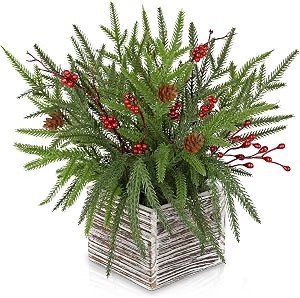
Oairse Faux Norfolk Pine Tabletop Centrepiece
A compact artificial Norfolk pine arrangement with pinecones and red berries. A maintenance-free alternative to a living miniature Christmas tree.
Affiliate link. Check Amazon.ca for current availability and delivery options.
3. Potted rosemary for a fragrant kitchen display
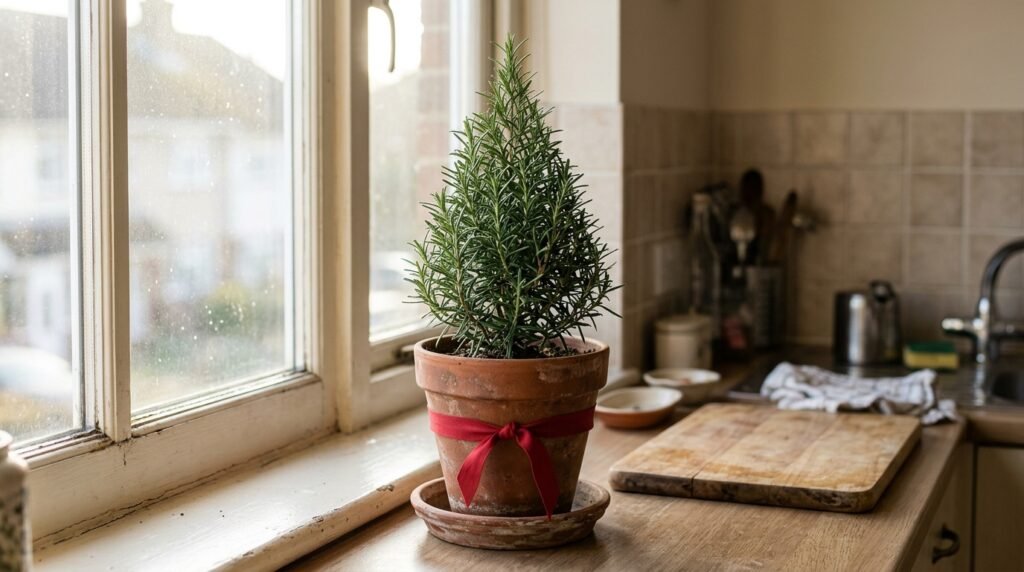
Rosemary is a lovely alternative to ordinary holiday greenery because it brings both fragrance and a practical purpose into the home. Some garden centres sell small rosemary plants shaped like Christmas trees, but an ordinary upright herb can look just as festive in an attractive pot. Try displaying it near a sunny kitchen window, where it is easy to admire while preparing meals. Keep it away from the heat of the cooker and leave enough room to use your counter comfortably. A simple pot is often all the decoration it needs.
Rosemary is happiest with strong light, so choose the sunniest suitable window rather than a dim shelf that happens to look attractive. If winter daylight is limited, a plant grow light may help. Rosemary also needs a freely draining mix and good air circulation. Check the soil before watering; avoid keeping the roots constantly wet, but do not repeatedly let the entire root ball become completely dry. Lift the inner pot out of its decorative cover when watering so you can see whether the excess moisture has drained away.
After the holidays, keep the plant in a sunny location and take small sprigs for cooking if it was sold as a culinary herb. Decorative nursery topiaries are not necessarily grown for consumption, so check with the seller before using them in food. When warmer spring weather arrives, you may be able to move the pot gradually to a sunny balcony. Rosemary itself is listed as non-toxic to cats and dogs, but concentrated essential oils are different and should not be applied to pets. If your apartment receives very little sunlight, another plant may be a more practical choice.
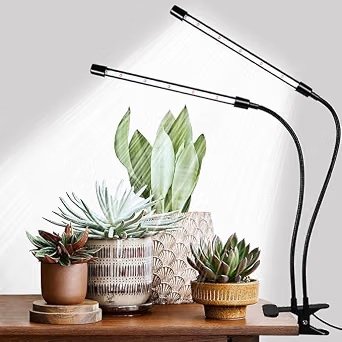
Hywyimlait Two-Head Clip-on Grow Light
A space-saving, clip-on full-spectrum grow light for indoor herbs when winter daylight is limited. Follow the manufacturer’s light-distance and electrical-safety instructions.
Affiliate link. Check Amazon.ca for current availability and delivery options.
4. Christmas cactus for beautiful blooms year after year

A Christmas cactus offers a colourful display without needing much floor space. Its jointed green stems arch over the edge of a container, and varieties produce pink, red, white and other coloured flowers. A small plant works nicely on a bright shelf or a side table, while an established specimen can become a feature of your indoor garden. Shops often sell related Thanksgiving cacti under similar holiday labels, so check the plant tag and remember that not every holiday cactus will bloom on Christmas Day.
Unlike many desert cacti, these plants originate in forest environments and prefer bright, filtered light and a freely draining potting mix. Water when the upper part of the mix begins to dry, allowing the container to drain properly. Do not treat the plant as though it should remain completely dry for weeks at a time. Once buds form, try to avoid dramatic changes in its location, temperature and watering routine, which can contribute to bud drop. Keep it away from a drafty exterior door or a hot radiator.
Once the flowers fade, you can continue caring for the green stems instead of packing the plant away with the Christmas decorations. Healthy holiday cacti can live for many years and can be propagated from stem cuttings. In autumn, long uninterrupted nights and cooler, non-freezing temperatures can help encourage the next flowering cycle. The timing varies with the species and indoor conditions. Christmas cactus is listed as non-toxic to cats and dogs, making it one of the more appealing seasonal plants for a household with pets, provided the pot itself is placed securely.
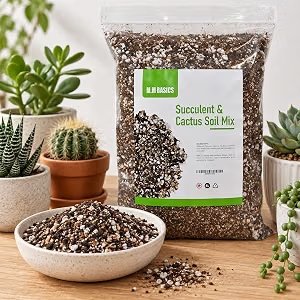
M.M BASICS Succulent and Cactus Soil Mix
A four-litre mix designed for drainage. Holiday cacti need a mix that drains freely while retaining some moisture; adjust the mix if it dries too quickly for your conditions.
Affiliate link. Check Amazon.ca for current availability and delivery options.
5. Amaryllis for dramatic flowers in one small pot
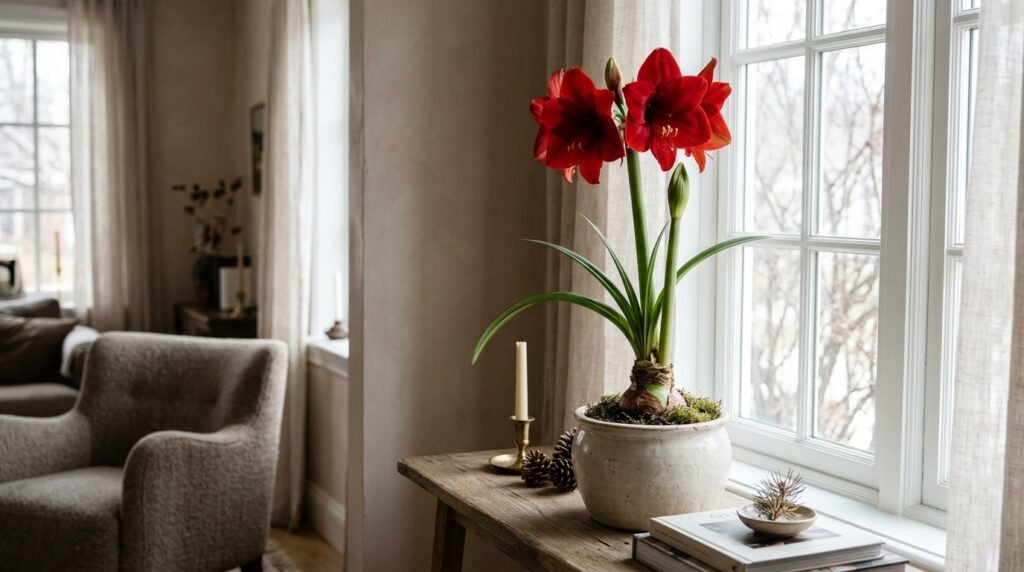
Amaryllis creates an impressive display with just one container. A large bulb produces a tall stalk and striking trumpet-shaped flowers that can become the focal point of a small room. Red and white varieties suit traditional Christmas decorations, while softer pink shades work nicely with neutral interiors. Because the plant grows upwards, it may fit comfortably on a narrow table with plenty of space overhead. Choose a heavy, stable container, especially if you expect the flower stalk to lean towards a nearby window.
If you are starting with a fresh bulb, follow the planting instructions for the variety you purchase. A close-fitting pot with drainage is usually enough, and the upper part of the bulb should remain exposed above the potting mix. Water lightly at first and increase watering as active growth develops without leaving the bulb in soggy soil. Give the plant strong light and rotate it gently if the stalk begins to lean. Flowering times differ, so a bulb started in November may not open precisely on Christmas Day.
To enjoy the plant beyond the holidays, remove the faded flower stalk but keep its healthy green leaves. These help restore the energy stored in the bulb for another flowering cycle. Continue providing appropriate light and water, and follow variety-specific instructions if you want to schedule a rest period and encourage another bloom. Do not cut off healthy foliage simply because the flowers have finished. Amaryllis is toxic to cats and dogs, particularly the bulb, so it is not a suitable choice for a shelf that curious animals can reach.

Willowy Ceramic Pot Bundle
Two ceramic planters with saucers in 6-inch and 4.5-inch sizes. Choose the pot that fits your individual amaryllis bulb and ensure that its drainage holes are open.
Affiliate link. Check Amazon.ca for current availability and delivery options.
6. Florist cyclamen for a cool and bright windowsill
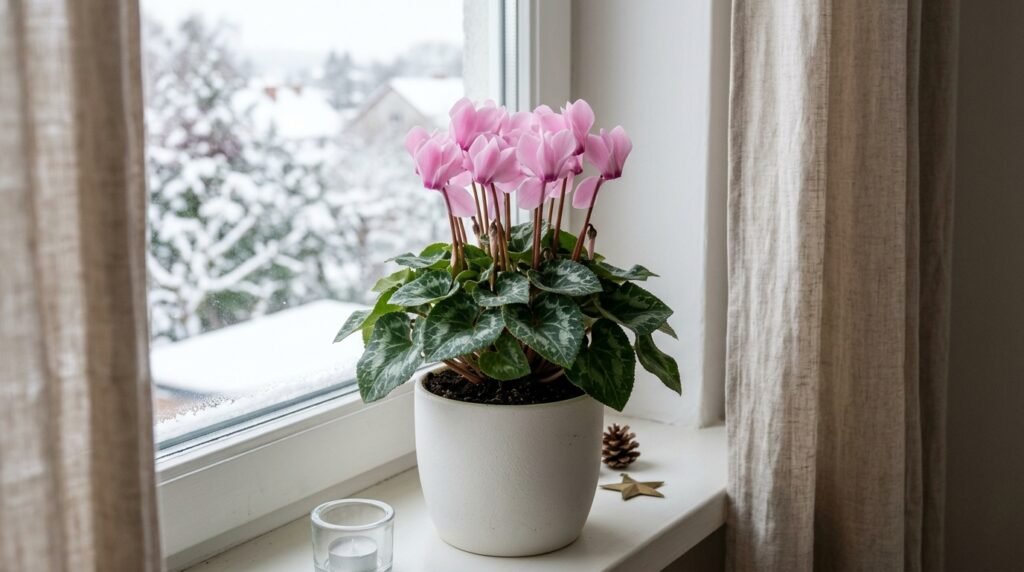
Florist cyclamen brings a different kind of Christmas colour into a compact home. The upright flowers sit above a rounded mound of patterned, heart-shaped leaves, making a single pot look like a complete display. White, deep red and pink varieties are all attractive choices. Look for a plant with healthy foliage and some unopened flower buds. Place it near a bright window in a moderately cool room, while leaving space between the leaves and cold glass. It is particularly useful when you want flowers but have limited space for arrangements.
Cyclamen prefers cooler conditions than many familiar tropical houseplants, so it may struggle on a shelf directly above a heating vent. During active growth, check the potting mix regularly and water as it begins to dry. Bottom watering is one useful method: place the nursery pot briefly in shallow water, then lift it out and allow it to drain. Avoid leaving it sitting in water and try not to repeatedly wet the central crown. Remove faded flowers carefully and choose a location where you can easily inspect the plant.
After flowering, florist cyclamen may gradually enter a resting phase as conditions become warmer. Watch for natural changes in the foliage, reduce watering as the plant becomes dormant and follow care instructions for your particular variety. It may flower again, although this can be more challenging in an apartment that stays warm throughout the year. Cyclamen is toxic to dogs and cats, especially its underground tuber. If you want a similarly compact flowering display in a pet household, consider a correctly identified African violet instead.
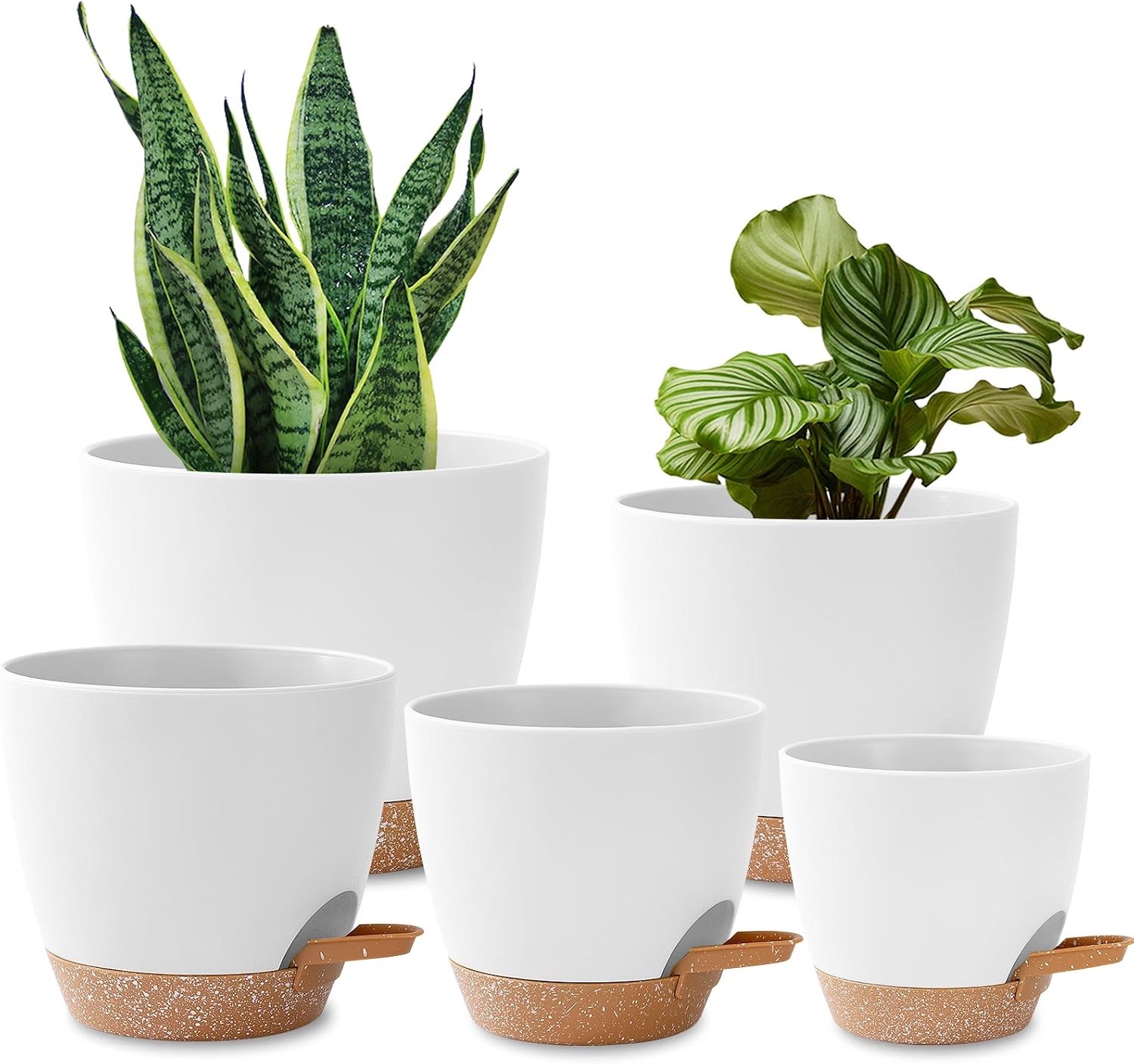
Zishine Self-Watering Planters (Set of 5)
A set of compact planters with a bottom-watering option. For cyclamen, use this feature carefully and drain excess water rather than leaving the roots continuously wet.
Affiliate link. Check Amazon.ca for current availability and delivery options.
Choose your Christmas plant according to the space you actually have, not just the colours that look attractive in a shop. Rosemary may suit a sunny kitchen, while a holiday cactus makes a lovely long-term flowering plant. A young Norfolk Island pine is ideal if you like the appearance of a tree without giving up an entire corner. Reuse containers where possible and make sure water can drain from the inner pots. One well-chosen, healthy plant is enough to make a room feel festive without a large decorating budget.
For more help with indoor heating and short days, see our winter houseplant care guide and pet-safer houseplants for small homes. Plant-care references include University of Minnesota Extension, New York Botanical Garden, Manitoba Master Gardener Association and the ASPCA plant toxicity database.