
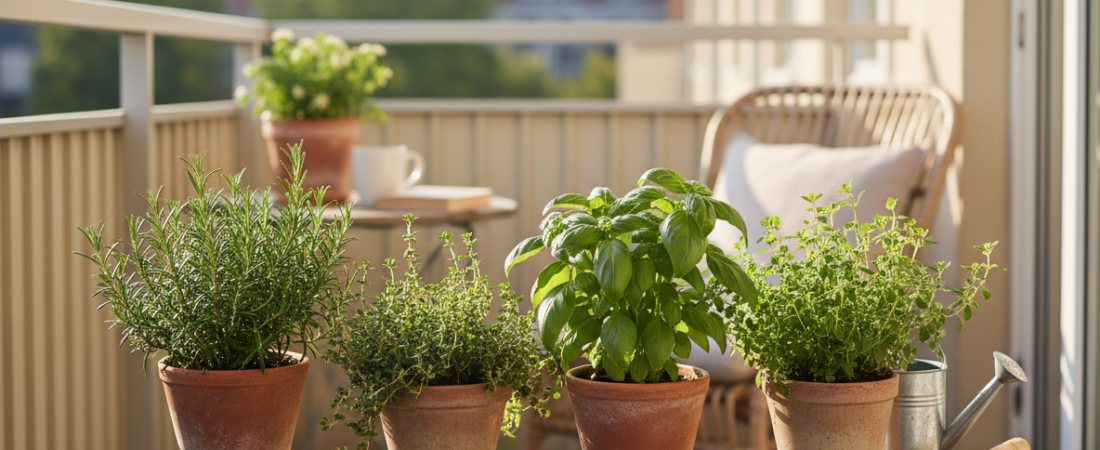
A sunny balcony can become a handy source of fresh herbs even with only a few containers. Start with herbs you use regularly rather than buying one of everything.
Plan before you plant
Measure hours of direct sunlight, especially in summer. Many culinary herbs enjoy strong light, while the amount of water and potting mix they need differs.
Practical balcony gardening steps
1. Grow basil for frequent harvests
Basil likes warmth and consistent moisture in draining mix. Pinch tips from established plants to encourage branching and remove flowers if leaf production is your goal.
2. Keep rosemary and thyme in drier spots
These Mediterranean herbs generally prefer excellent drainage and less constant moisture than basil. Separate pots make it easier to water each appropriately.
3. Give mint its own container
Mint spreads aggressively and can crowd neighbors. A dedicated pot controls its roots and makes the plant easier to manage.
4. Try chives in a smaller pot
Chives can be useful for modest spaces. Harvest leaves without cutting the entire plant to soil level each time.
5. Move pots during extreme weather
Strong wind, frost or prolonged heat can stress balcony herbs. Check their temperature tolerance and bring tender plants into shelter when appropriate.
Mistake to avoid
Do not group dry-loving rosemary and moisture-loving basil in one tiny planter with a single watering routine.
Your next small step
Choose one manageable change to make this week. Check the light and exposure, measure the available space, and review your building rules before buying any permanent fixture or large container.
Match sunny-balcony herbs to heat and moisture needs
A sunny balcony can be productive, but a dark railing or concrete floor may reflect heat into small pots. Basil, rosemary, thyme and mint all respond differently to dryness, so don’t put every herb on the same watering schedule.
Check how long direct sunlight reaches your containers and whether wind dries the potting mix quickly. Most culinary herbs need good drainage, but some tolerate a drier root zone than others.
- Basil: likes warmth, good light and reasonably even moisture; protect it from cold nights and harvest above leaf nodes to encourage branching.
- Rosemary and thyme: tend to dislike persistently wet roots; choose well-draining media and avoid soaking them just because nearby basil needs water.
- Mint: often spreads vigorously. Give it its own container rather than allowing it to crowd other herbs.
- Parsley: can work in a balcony pot with sufficient light and moisture, but it may grow less vigorously in heat extremes.
- Harvesting: avoid removing most foliage from a young plant at once; small repeated harvests are easier on the plant.
Two-pot test: grow basil and thyme in separate draining containers, then note how differently the mixes dry after watering. This teaches more than a single mixed pot with incompatible moisture needs. Read growing herbs without a garden and balcony watering in hot weather.
Three easy layouts for a balcony herb garden
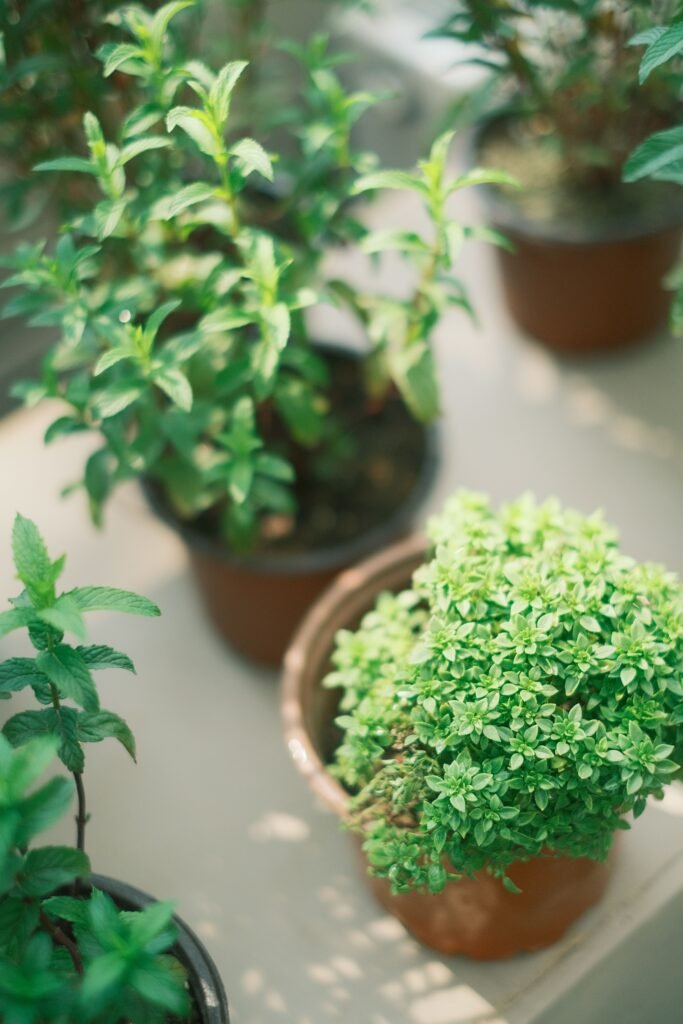
A good herb garden should still leave you room to sit, open the door and move a watering can around. One simple arrangement is a row of three separate pots against a wall: basil nearest the kitchen door, chives in the middle and thyme in the sunniest, driest position. Keep the containers low enough to reach without stretching over a railing. The practical benefit is that you can harvest a few leaves while cooking without disturbing the other plants.
If the floor is already crowded, use a sturdy, freestanding plant shelf with broad feet rather than hanging heavy containers over the railing. Put the largest, wettest pot on the bottom shelf and lighter plants above. Check the building rules before adding planters, and remember that wet soil is heavier than dry soil. Leave space for runoff trays and make sure water cannot drip onto a neighbor’s balcony. A beautiful display is less useful if you have to move everything whenever you water.
For a balcony used mainly for relaxing, create a small herb corner instead of lining every edge with pots. One wide but stable container can hold compatible herbs, while a separate pot of mint sits nearby. Add an outdoor-safe seat or a small folding table only if the path stays clear.
Choose the right pot before thinking about colors
Drainage is the first feature to check. A decorative pot without an outlet can trap water around the roots, so use a nursery pot with drainage holes inside it and empty excess water from the outer container. For a small starter plant, choose a pot that gives its root ball modest room to grow rather than one that holds a huge volume of wet mix. As herbs mature, look for roots circling the pot, unusually quick drying or declining growth before moving them up a size.
Terracotta can look lovely with leafy herbs, but it often dries faster than plastic or glazed containers. That may suit thyme in a rainy climate, yet require more frequent checking for basil on a hot, windy balcony. Dark pots can also heat up in direct afternoon sunshine. There is no universally perfect material: choose based on sunlight, how often you can check your plants and whether the container can stand securely in its location.
Build a watering routine around the plants, not the calendar
Try lifting each pot shortly after watering to learn how heavy it feels. A few days later, lift it again and check the mix with a finger. You will soon notice that a thirsty basil plant in a small container may dry long before a rosemary plant in a larger one. Water thoroughly when the plant needs it, allow excess to drain and avoid leaving roots standing in water. During heat waves, inspect pots more often rather than automatically watering everything twice a day.
Wind changes the situation quickly. A railing-side pot may lose moisture faster than a similar pot sheltered beside the door, even when both receive the same sunlight. If leaves wilt, check the soil before assuming the answer is more water; prolonged wetness, midday heat and a cramped root system can create similar symptoms. Write down a few observations for a week. Those notes are more reliable than trying to follow a fixed routine copied from someone growing herbs in a different climate.
A small harvest plan makes the garden feel worthwhile
Choose herbs you already cook with. A few basil leaves can brighten pasta, chives are useful on eggs or potatoes, and a small sprig of thyme works in roasted vegetables. Snip clean, healthy growth with scissors, taking only a modest portion from young plants. Harvesting some herbs regularly can encourage branching, but cutting too aggressively may slow recovery. With rosemary, avoid removing much of the old woody growth; new shoots are the more useful place to take light harvests.
Try a weekly five-minute kitchen check. Before shopping, look at which herbs are ready to cut and plan a simple meal around one of them. If basil is growing faster than you can use it, make a small batch of pesto or freeze chopped leaves in a food-safe container. If a plant struggles, keep it as a learning project instead of immediately buying a replacement. The garden earns its space when the plants fit ordinary meals and routines.
Common problems to watch for
Yellowing leaves can have more than one cause, including overly wet soil, poor light or natural aging. Dry, crispy edges may reflect hot wind, inconsistent moisture or other stress. Check the whole plant and its growing conditions rather than treating a single leaf as a diagnosis. Also inspect underneath leaves for pests before bringing outdoor herbs indoors at the end of the season. Use appropriate controls only when you know what you are dealing with and follow the label.
If basil becomes tall and sparse, review its light and pinching routine. If thyme looks limp in constantly damp compost, reassess drainage and placement before adding fertilizer. Keep leaves off hot glass or metal surfaces during very warm afternoons. The best beginner lesson is to change one thing at a time: location, watering frequency or container size. That way, you can tell which adjustment helped instead of making several changes and never knowing why.
What to do when the season changes
Most tender culinary herbs should not be left outside through a hard frost. Check the expected minimum temperature for your particular plant, especially basil, and move vulnerable containers before cold weather arrives. Bringing a pot indoors is not always a guarantee of winter growth; a dim windowsill and dry indoor heat can be challenging. If you want fresh herbs all winter, plan for enough light and realistic harvests rather than assuming summer productivity will continue indoors.
Before the growing season ends, take a few photographs of your setup and note which pots were easiest to manage. Did the sunny railing dry out too fast? Did the mint need more space? Was the basil close enough to the kitchen to be used regularly? Those specific observations can shape a better plan next spring.
Frequently asked question
How much sun do balcony herbs need?
Many prefer roughly six or more hours of direct light, although species and climate affect the ideal amount.
More balcony inspiration
Browse our Balcony Gardening section and balcony gardening on a budget guide. For container stability and balcony load considerations, read Illinois Extension’s container-size advice.