
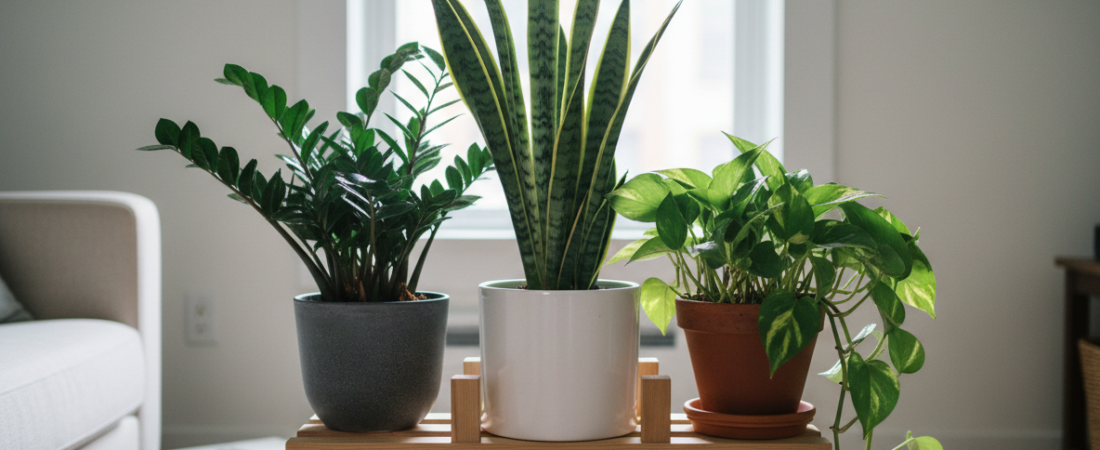
A north-facing window in the Northern Hemisphere often receives mostly indirect light. That can suit several foliage plants, especially close to unobstructed glass. In the Southern Hemisphere a north-facing window can be much sunnier. Wherever you live, choose for the light that reaches the leaves rather than the compass label alone.
Find the brightest usable spot before choosing a species
Stand where the pot will sit and look towards the window. How much open sky can the leaves see? A balcony roof, tree canopy or building opposite can cut off a large part of the daylight. Check the spot in the morning, near midday and later in the afternoon with the curtains as you normally use them. A room you visit only at its brightest can give a misleading impression of the light available across the day.
Compare at least two locations, such as a low stand immediately beside the glass and a shelf farther inside. Notice whether the top of the window frame shades a high shelf or a chair blocks light from a floor pot. Keep enough clearance for leaves to avoid cold glass and enough room to inspect the growing mix. The best location is usually one where the plant can both receive light and be looked after easily.
Make a low-light planting work in five steps
Start with a single plant rather than filling every available shelf. A foliage plant selected for modest light is a more realistic choice than a sun-loving crop expected to flower or fruit in the same place. Know what normal growth looks like for the species. A cast-iron plant or ZZ plant may take time to produce a new leaf even under suitable conditions. A trailing pothos may show a difference sooner in the spacing of its newest leaves. The following steps help you judge placement without mistaking every quiet week for failure.
1. Choose a plant known to tolerate modest light
Cast-iron plants, ZZ plants, snake plants and some pothos are candidates for a genuinely low-light indoor spot. They differ in shape and care. A cast-iron plant needs room for broad leaves, a snake plant grows upright and pothos trails past the pot rim. Variegated pothos may show less distinct markings in dimmer conditions. Think about the space available in a year and whether the plant is suitable around animals before deciding which form you prefer.
2. Place the pot where the leaves receive daylight
A shelf immediately to the side of a window can be darker than a stand slightly farther away but directly in front of the glass. Move an empty pot between the two and compare the daylight at its top. Keep curtains from cutting the plant off from the room or trapping it against a cold pane. If the plant starts leaning gently towards the light, occasional rotation can even out its appearance, but rotating alone does not brighten a genuinely dark spot.
3. Water for the slower drying rate
Feel the mix below the surface and lift smaller pots when practical. A plant using less light often uses water more slowly, particularly in a cool room. Let the species determine how dry it should get. A ZZ plant and a foliage plant with thinner leaves may not be ready for a drink together. Water thoroughly when needed, allow excess to drain and empty the saucer. A hidden puddle inside a decorative pot can keep roots wet even when the upper surface looks dry.
4. Investigate stretched or weak new growth
Compare the newest stem or leaf with growth formed before the plant moved. Longer spaces between pothos leaves or a pronounced lean towards the glass can suggest inadequate light. Slow growth alone tells you less, particularly in winter. If the mix remains wet for a long time, check drainage and roots as well. Move towards better light gradually and monitor the next growth. Adding fertiliser without correcting a severe light shortage will not give the plant the energy it lacks.
5. Use a grow light for a specific gap
Identify the shelf area and the distance between a possible fixture and the leaves. Compare those dimensions with the manufacturer’s instructions for the plant type. A timer can keep the lighting period consistent and allow a regular dark period. Position the fixture so it will not shine directly into people’s eyes from a sofa or desk, and keep cords clear of watering areas. Follow its mounting, ventilation and electrical instructions. Check coverage again if the plant grows beyond the original lit area.
Keep windowless corners and chewing pets in mind
A plant described as low-light tolerant still needs usable light for long-term growth. A hallway that only gets light when someone walks past is a different environment from a shaded window. If you want greenery in that hallway, provide suitable plant lighting or choose a display that does not depend on a living plant. Check the species against your household as well. Pothos, snake plants and ZZ plants can be harmful to cats or dogs if chewed. A plant may suit the light while remaining a poor choice for the floor beside a pet’s sleeping spot.
Try a small change near the window this week
Choose one plant already living in the room and photograph its newest growth. Move it closer to a brighter usable position if the species, temperature and available clearance allow. Note how damp the mix feels on the day of the move. Then monitor the pot over the following weeks without automatically changing its feed or watering it more often. Check whether new growth remains firm and whether the pot dries at a different rate. If nothing changes immediately, remember that a slow-growing indoor plant needs time to produce evidence you can actually compare.
Assign plants to the room’s different light levels
Give the clearest part of the window to a plant that can use the light without brushing the glass. A stand partly hidden behind the sofa may need raising or moving sideways so the leaves see more sky. A distant shelf that looks attractive from across the room may receive very little daylight. Check at leaf level before deciding whether that spot needs a lamp. If you place several plants near the same window, make sure a large, dense plant does not block a smaller one behind it.
A seasonal change can alter the arrangement. A deciduous tree may shade the room heavily in summer and admit more light without its leaves, even as winter days shorten. If a curtain stays closed for warmth or privacy for much of the morning, that also matters. Keep the plants accessible for inspection rather than lining the entire sill with pots that must be moved one by one to reach the back row.
A useful test is to compare new growth over several weeks: persistent stretched stems, fading variegation or slowed growth can indicate a light mismatch, but also check watering and root health. See our LED grow-light selection guide before buying any fixture. For more background, the University of Minnesota Extension explains indoor light levels.
Plan for a shelf that has no useful daylight
Ordinary room lighting may be bright enough for you to walk through a room while providing too little light at plant level for long-term growth. To use a windowless shelf, choose a grow light suited to the shelf area and the plants. Check its coverage, mounting distance and timer instructions. Think about where the leaves will be when the plant grows taller. A fixture that illuminates one small pot directly beneath it may leave adjacent pots largely in shadow. If a workable lighting setup would obstruct the room, keep living plants nearer the window instead.
Use new leaves to judge the arrangement
Keep one simple record for each plant you try in the room. Note the date, position and which part of the plant was newest when it arrived. A photograph taken from the same side later helps you see whether the next section grew compactly, stretched or stayed unchanged. Check root health and moisture alongside that comparison. If a plant remains stable but grows slowly and you like it there, rapid growth need not be the goal. The guides below can help you compare species and choose a different plant for a brighter part of your home.
Explore our Indoor Plants collection and the 10 Best Indoor Plants for Small Apartments guide for more ideas. For general plant placement and care, see Oregon State University Extension.