
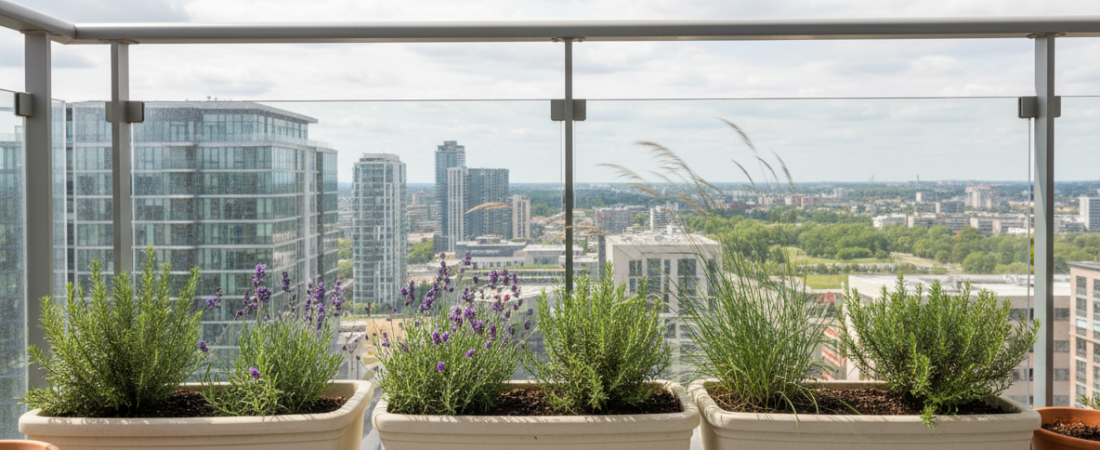
Wind can dry potting mix quickly, damage broad leaves and tip top-heavy containers. Choosing compact plants and stable planters matters as much as choosing flowers.
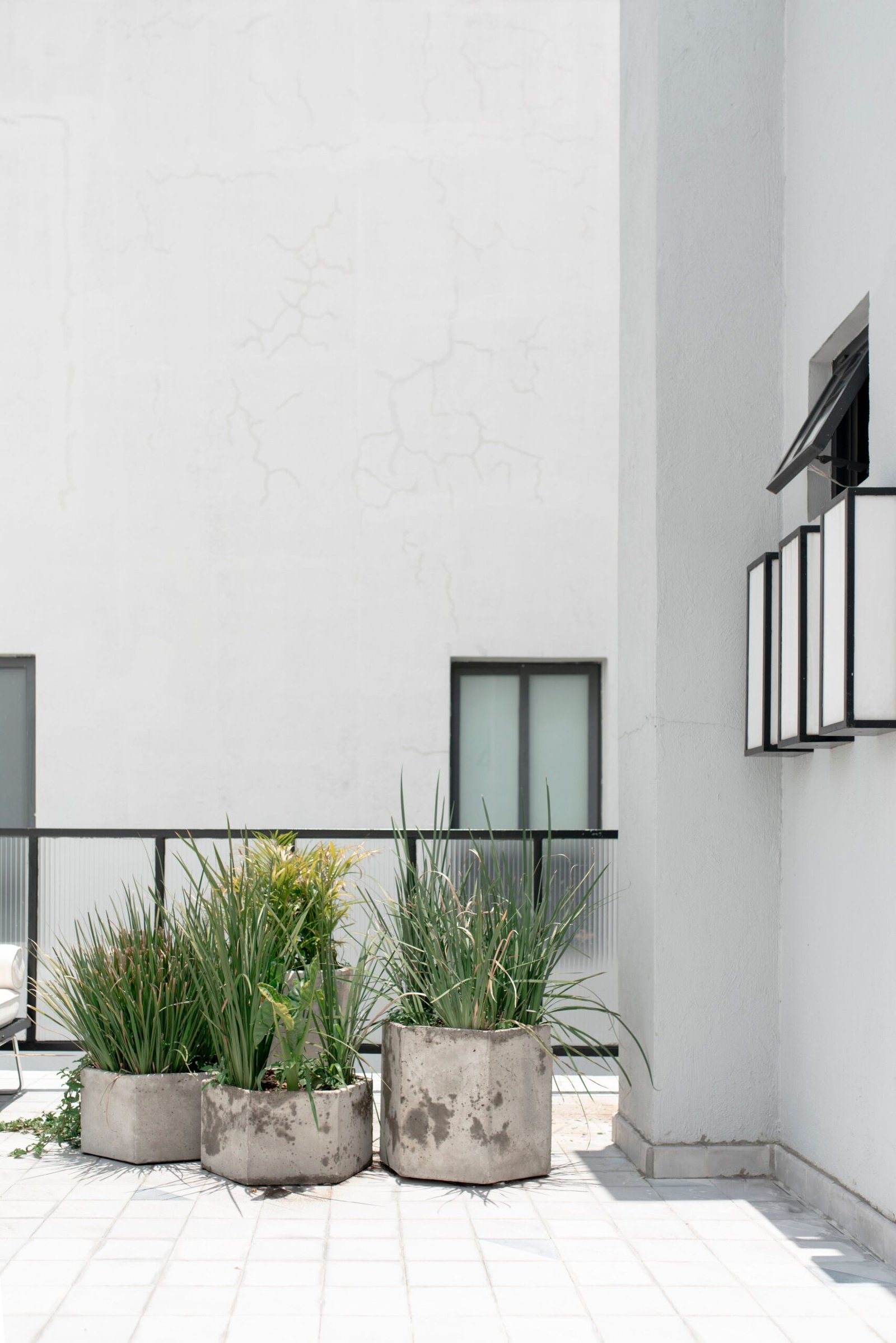
Plan before you plant
Observe when gusts are strongest and which corners are sheltered. Consult building rules for screens, trellises, clamps and railing planters before adding structures.
Practical balcony gardening steps
1. Favor compact sturdy growth
Low-growing herbs such as thyme and chives and compact bedding flowers may handle breezes better than very tall, unsupported plants. Match choices to sunlight too.
2. Use broad stable pots
Short, wide, weatherproof containers are less likely to tip than narrow, top-heavy ones. Do not attach weighted planters to railings without permission.
3. Place tall plants thoughtfully
Keep taller plants closer to a sheltered wall when allowed. Avoid a dense screen that catches wind like a sail.
4. Check water more frequently
Wind increases moisture loss from leaves and containers. On blustery days, test the mix rather than assuming a normal watering schedule is enough.
5. Protect vulnerable seedlings
Start delicate seedlings indoors or in a protected position, then acclimate them gradually. Support vines with approved sturdy structures.
Mistake to avoid
Do not assume every drought-tolerant plant is windproof. Brittle stems and oversized leaves can still be damaged by gusts.
Your next small step
Choose one manageable change to make this week. Check the light and exposure, measure the available space, and review your building rules before buying any permanent fixture or large container.
How to reduce wind damage without blocking airflow
Wind increases evaporation, can tear leaves and may tip tall containers. A balcony several floors up can have stronger gusts than the garden below. Choose plant forms and containers for that exposure before spending on delicate flowering varieties.
A complete solid windbreak is not always safer. On a balcony, a tall opaque panel can catch wind like a sail and may violate building rules.
- Choose compact growth: low, bushy plants usually offer less wind resistance than tall unsupported stems. Look for varieties suited to exposed positions.
- Use stable containers: a wide base helps resist tipping; calculate the wet weight of the planter and confirm balcony limits.
- Group carefully: clustered pots can offer some mutual shelter, but leave space for watering, cleaning and air movement.
- Stake where appropriate: use plant supports that won’t scratch or attach to the building without permission.
- Monitor water: wind can dry containers even on cooler days. Feel the mix rather than assuming the weather was not hot enough to matter.
Test your setup: begin with one or two durable containers in the most sheltered approved corner. Watch them through a windy day before adding a vertical trellis. Check renter-friendly no-drill setups and heat-wave watering.
Understand where the wind actually comes from
Wind behaves differently on an upper-floor balcony than it does in a sheltered garden. Air can rush around building corners, funnel between nearby towers or bounce off solid walls. Watch which areas receive the strongest gusts on several ordinary days, without leaning over a railing or going outside in unsafe weather. A corner that feels calm in the morning may be very exposed later in the afternoon. Those observations are more useful than choosing plants solely by their appearance.
Look at what happens to items already on the balcony. Do lightweight objects move towards the door? Are existing plants leaning in one direction? Note whether the exposed edge receives strong sun as well, because wind and heat can dry potting mix together. When the conditions are harsh, begin with one small pot in a suitable sheltered position and observe how it performs for a couple of weeks before committing to a larger display.
Five plant types worth considering
Low-growing herbs such as thyme can be reasonable candidates where sunlight and drainage suit them. Chives have narrow foliage and may also work in a stable pot, but both need enough growing room and the right watering routine. A compact rosemary may tolerate a breezy setting in a mild climate, although it is not reliably winter-hardy in an exposed container everywhere. Check the variety and local growing conditions before assuming that any Mediterranean herb will thrive.
Succulents can have sturdy foliage and modest water requirements, but their shallow containers can still blow over and their tolerance for cold, moisture and intense sun varies widely. Compact flowering annuals may provide color without the sail-like effect of a tall plant. Look for low, branching forms rather than long unsupported stems. A plant sold as a ‘patio favorite’ is not automatically suited to a high-rise balcony; mature height and actual exposure still matter.
Ornamental grasses give movement and texture, yet not every grass is a good choice. Tall plumes can catch wind, large root balls add weight and some species spread aggressively. If you enjoy that look, ask a local nursery about compact, clumping varieties that fit your climate and container size. Whatever you plant, avoid making a tall, heavy screen in a narrow pot. The safest and healthiest arrangement may be much lower than an inspiration photograph suggests.
Planters that resist tipping and dry-out
Start with a broad-based container that sits flat on a level surface. Compare the manufacturer’s outdoor-use guidance and the combined weight of the pot, wet mix and mature plant. Wider planters are generally easier to position securely than very narrow, top-heavy ones, but no pot is guaranteed not to move in severe weather. Do not suspend heavy planters from railings or add improvised anchors. Your landlord or building management should confirm what is permitted.
Terracotta can be attractive but may dry quickly in a hot breeze; plastic is lighter and easier to move but may need extra attention to stability. Self-watering reservoirs can reduce sudden drying for some plants, although they still require monitoring and are not suited to every species. Keep proper drainage holes and collect runoff safely without leaving roots standing in water. Test how fast a new container dries before grouping plants with very different moisture needs.
A layout that creates shelter without a wind trap
Place low containers together along an approved interior wall or corner rather than spreading them along the outermost railing. A stable grouping can make watering easier while keeping the central walkway open. Position the shortest plants towards the front so they do not become hidden behind taller leaves. Avoid piling heavy pots into one corner without checking the balcony’s structural restrictions. The goal is an accessible planting zone, not a wall of greenery.
A solid outdoor privacy screen may seem like an easy fix, but it can catch a surprising amount of force in gusts. Never attach a fabric sail, tall lattice or freestanding panel without checking the building’s rules and safe installation requirements. In many cases, choosing shorter plants and using the natural shelter of the building is more practical. If the balcony has a particularly exposed corner, it may be better to leave that area open altogether.
Adjust watering and pruning in windy weather
A dry-looking top layer does not always mean the whole root ball is dry. Lift a small pot when safe and feel the mix below the surface. Plants beside a wall and plants facing open air may need different checks even on the same balcony. Water thoroughly only when appropriate for the plant, allow drainage and empty catch trays before they overflow. During hot, breezy weather, check more frequently without falling into a rigid twice-daily schedule.
Remove broken, dead or diseased growth with suitable clean tools, but do not strip a stressed plant of healthy foliage simply to make it look tidy. A small trellis or support may help certain climbing plants when correctly designed and allowed, but it must be secure and sized for local wind conditions. Check leaves for scorch, tearing and pests after calm weather returns. If a plant repeatedly suffers damage, moving it to a safer location is often wiser than buying more equipment.
A simple two-week test and seasonal plan
For the first week, try two compact containers with similar light requirements but different foliage. Record which one dries faster, whether either tips or leans, and what happens after a rain shower. Take photographs from inside the balcony door at the same time of day. That gives you a realistic comparison before you invest in larger planters. You may find that a small, low herb display is both easier and more attractive than a complicated vertical garden.
Before winter or a forecast storm, follow your building’s rules for securing or moving balcony items. Do not attempt to handle heavy pots during dangerous winds. Tender plants may need an indoor position with adequate light before temperatures fall; some pots can crack if left saturated and frozen. Keep a clear route for moving small containers to shelter before bad weather arrives.
Frequently asked question
Can I use a windscreen on an apartment balcony?
Check building restrictions and safe anchoring requirements first; a loose screen can become hazardous.
More balcony inspiration
Browse our Balcony Gardening section and balcony gardening on a budget guide. For container stability and balcony load considerations, read Illinois Extension’s container-size advice.