
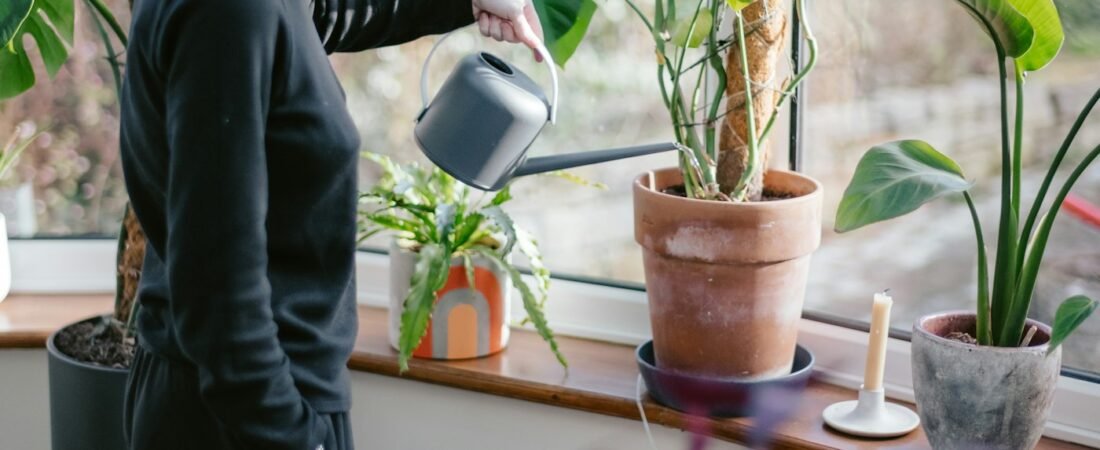
Houseplants rarely need water on exactly the same day every week. Learning how a pot feels and how its growing mix dries is more reliable than following a rigid calendar.
First, check the growing conditions
Before watering, check the species, container size, light level and season. Succulents and moisture-loving tropical plants can need very different intervals.
Step-by-step plant care
1. Feel below the surface
Insert a finger or clean wooden skewer a little way into the mix. A dry crust on top does not always mean the deeper root zone is dry.
2. Learn the pot’s weight
Lift smaller pots after watering and again as they dry. The weight difference can become a helpful clue once you know your plant.
3. Look at the plant and soil together
Wilting can indicate either thirst or damaged roots in wet soil. Check moisture and drainage before deciding what the symptom means.
4. Water thoroughly when appropriate
Use enough water to moisten the root zone and allow excess to leave the drainage holes. Empty the saucer after drainage.
5. Change routines with seasons
Short winter days often slow growth and soil drying. Recheck each plant instead of continuing a summer watering schedule unchanged.
Compare watering needs before reaching for the watering can
A watering reminder should mean check the plant, not automatically add water. Compare three clues: the moisture several centimetres below the surface, the weight of the pot, and how the foliage has changed since its last healthy day. A light pot with dry mix may need water, but a heavy pot with wet mix and drooping foliage could have stressed or damaged roots. If water runs straight down the pot sides without moistening the root ball, the mix may have become hard to rewet; moisten it gradually and verify that water reaches the center.
Plant type and light matter. Many succulents and snake plants store water and usually prefer greater drying between waterings than thin-leaved tropical foliage plants. Ferns often need more consistently moist, well-aerated mix, but do not benefit from standing water either. A pot in brighter light or a warm windy position may dry faster than the same species in a cooler, darker room. Plastic, terracotta, pot size and the growing medium also alter the drying rate. There is no universal one-week interval that fits all these conditions.
Try a one-week experiment with three pots: after watering and draining, note each pot’s weight and the feel of the mix; check again after several days without automatically adding water. Keep a saucer or outer cover empty after drainage, and confirm the pot has working holes. If leaves keep wilting in wet soil, inspect root health before watering again. University of Minnesota Extension explains how light levels influence water use in indoor plants. Use the record to learn each pot’s pattern rather than following a fixed calendar.
Mistake to avoid
Avoid frequent little splashes that leave the root ball unevenly moist. Equally, never keep every pot wet just to avoid drying.
A practical care habit
Make a quick note of the plant’s location, pot size and last watering. Change only one factor at a time whenever possible; this makes the outcome easier to judge and helps you build a routine based on real conditions.
Should you buy a soil moisture meter?
For houseplant watering, start with a free method: feel the potting mix below the surface with a finger, or insert a clean wooden skewer and check whether it comes out damp. Lift smaller pots occasionally to learn how much lighter they feel as the mix dries. A fixed watering schedule and a single reading cannot replace knowing the needs of the species.
- What a meter can help with: in deeper pots, a simple probe may offer an extra reference point when the top layer looks dry but the center stays damp.
- What it cannot tell you: inexpensive probes may be imprecise in some mixes and cannot diagnose root rot, fertilizer problems or all differences between plants.
- How to use it: follow the product instructions, check more than one position if possible, and combine the reading with the feel of the soil and the plant’s condition.
- When to skip it: if you can already judge moisture confidently by touch or a wooden skewer, you may not need an extra gadget.
Optional product: XLUX single-probe soil moisture meter is a battery-free option for checking potted soil. Compare its use instructions and limitations before purchasing. Paid Amazon affiliate link; as an Amazon Associate I earn from qualifying purchases. See our affiliate disclosure.
Learn more from University of Maryland Extension’s moisture-meter advice, the root-rot recovery guide and our guide to grow lights—because watering needs also change with light and season.
Frequently asked question
Should I water all my plants on Sundays?
Use Sunday as an inspection day, not an automatic watering day.
Keep learning
Read more in our Plant Care section and indoor plant care for beginners. For identification and basic houseplant care, consult Oregon State University Extension.