
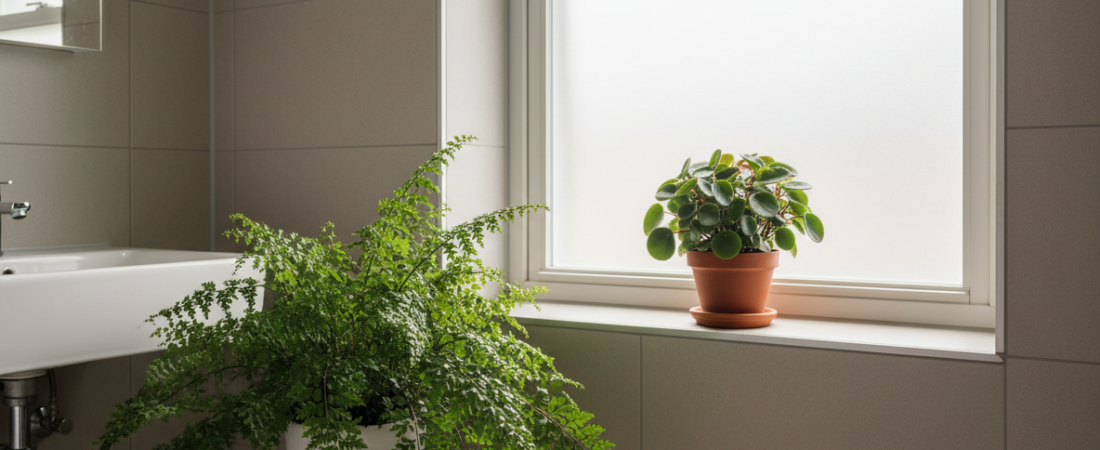
Bathrooms can offer humidity, but plants still need enough light. The best candidates are those that appreciate moist air and fit safely away from splashes.
Before you begin
Check whether the bathroom has an actual window or a grow light. A windowless bathroom with the light switched off most of the day is not a good permanent location.
Practical steps for a small space
1. Try suitable greenery
Boston fern and certain calatheas may appreciate higher humidity when their light needs are met. Check exact species and pet safety.
2. Keep pots away from standing water
Humidity is not the same as soggy soil. Use draining nursery pots and empty decorative covers after watering.
3. Protect plants from temperature shifts
A cold bathroom window or frequently opened vent can stress tender leaves. Move pots away from drafts and frosty glass.
4. Clean surfaces and leaves
Wipe moisture from shelves and trays. Good bathroom ventilation reduces mold risk on the room’s surfaces.
5. Match size to the room
Choose a compact plant that does not block toiletries, mirrors or safe movement around the shower.
Common mistake to avoid
Do not put a plant in a dark bathroom merely because it “likes humidity.” Light remains essential.
A simple plan for this week
This week’s bathroom plant test: choose one species suited to your window’s actual light, rather than assuming shower humidity is enough. Set its draining pot away from cleaning sprays and direct splashes, then note whether the mix dries between checks. Keep the bathroom ventilated and compare new leaves over the next few weeks. If the room has no usable daylight, reconsider the location before purchasing another plant.
Bathroom plant placement: humidity is not enough
A bathroom may feel humid after a shower, but a plant still needs useful daylight, suitable temperatures and a pot that drains. A windowless bathroom with only ordinary ceiling lighting is unlikely to sustain most houseplants long term.
Before buying a plant for the shelf or windowsill, observe light throughout the day and ask whether leaves will get splashed with soap, cleaners or hot water.
- Bright, indirect window light: consider a suitable fern or another foliage plant that likes moderate humidity; verify the exact species and its light requirement.
- Direct sun through glass: leaf scorch is possible even in a damp room. Move tender foliage away from intense sun.
- Ventilation: good airflow matters. Constant condensation and persistently wet potting mix can create problems rather than helping the plant.
- Temperature: watch for drafts from an open winter window or rapid cooling after a hot shower.
- Practical care: empty drainage trays, keep foliage away from cleaning sprays and check soil before watering; humidity does not replace root-zone moisture.
A simple trial: start with one appropriately labelled plant near the brightest window, then observe new leaves for a month before decorating the entire room. For a broader placement strategy read how to measure apartment light and when to water houseplants.
Start with the window, not the humidity
A warm shower can leave the bathroom feeling humid for a while, but that does not replace daylight. Look at how much natural light reaches the windowsill through the day. Frosted glass, an overhang or a neighboring building can make a bright-looking room surprisingly dim at plant level. If the only light comes from a ceiling fixture used for a few minutes at a time, choose another room or install a suitable grow light safely and correctly.
Choose the place where a plant can stay without blocking the mirror, tap or ventilation. A little pot beside a bright window may be more successful than a trailing arrangement above the shower. If the room is used by several people, consider how easily a pot might be knocked over. Avoid placing plants near electrical outlets or on narrow, unstable ledges. The first goal is a healthy plant that fits your daily bathroom routine.
Six plants to consider for a bright bathroom
Boston fern is a familiar option for a bathroom with bright indirect light and reasonably consistent moisture. Its fine fronds can look attractive on a safe shelf, but they may dry at the edges if the room stays hot and dry between showers. Keep the roots properly watered without leaving the pot sitting in water. This is not a good choice for every tiny bathroom; mature ferns can become wide and need room to grow.
Some prayer plants and calatheas appreciate moderate humidity and gentle indirect light, although they can be sensitive to irregular watering and mineral buildup. Their patterned foliage is appealing in a simple ceramic cover pot, but they are not effortless plants. If you often forget to check soil or have only a dim window, start with something more forgiving. Research the particular species before buying, since plants marketed under broad common names can have different care needs.
Spider plants can offer a lighter, arching shape when they receive enough light and water. Pothos may trail neatly from a stable surface, but it should be kept away from pets that might chew it. Small peperomias come in compact varieties suitable for windowsills or shelves, though their moisture needs differ from ferns. A peace lily can also grow in adequate indirect light, but it is toxic to cats and dogs. Pet safety matters more than matching a decorating photo.
Orchids such as a common moth orchid may do well near suitable filtered light when their root and watering requirements are met, but steam alone is not enough. Avoid constantly wet bark or a decorative container that traps water. If you want flowers, check temperature and light needs carefully instead of assuming any plant labeled ‘tropical’ will love the bathroom. A green leafy plant that stays healthy often looks better than a flowering specimen struggling in the wrong place.
Three placement ideas for small bathrooms
On a wide windowsill, try a single compact peperomia in a draining nursery pot inside a removable ceramic cover. Leave clearance for opening the window and cleaning the glass. A simple pot can bring greenery into the room without filling the sink counter. The plant should not press directly against cold winter glass or sit where water splashes into its crown. Check the surface below it regularly for moisture marks.
An appropriately installed, stable shelf can hold a small plant away from everyday sink splashes, provided the plant still receives adequate light. Renters should check whether shelves are allowed and never improvise attachments to tile or plumbing. Avoid high arrangements that require climbing over a bathtub to water them. If a hanging plant is difficult to reach, its attractive appearance will not make up for the inconvenience of checking the soil.
For a larger bathroom with a true bright corner, a floor-standing fern may soften a plain wall. Measure the plant at mature size rather than judging only the pot in the shop. Keep it clear of the door swing, laundry baskets and the route to the shower. A simple waterproof tray can protect the floor, but it must be emptied after watering. Avoid putting a pot over a floor drain or where it could be knocked over at night.
Water properly despite the steamy air
Humidity describes moisture in the air, not in the soil. A fern may need a more consistently moist mix than a succulent, but both require drainage and enough air around the roots. Check with a finger or by carefully lifting the pot before watering, and learn how fast it dries in your room. Decorative cover pots are useful for catching drips only if you remove standing water. Constantly wet roots can create serious problems even in a lovely bathroom.
Bath products, cleaners and hot water can damage foliage, so move plants out of the way before spraying cleaning products. Wipe smooth leaves gently when dusty and avoid leaving water trapped in tight leaf crowns. Ventilation matters too: a bathroom with persistent condensation or mold needs the underlying moisture issue addressed, not more plants. Keep foliage off damp walls and allow reasonable airflow around shelves and windows.
Temperature and seasonal changes
A bathroom may go from cool to very warm within minutes. Plants placed next to a frequently opened winter window can experience cold drafts even when the room feels cozy after a shower. In summer, direct sun through glass can heat a small container faster than expected. Watch for bleaching, brown edges or stalled growth and check light and temperature before reaching for fertilizer. Moving a pot a short distance can sometimes solve a placement problem.
During darker months, plants may use water more slowly even if the bathroom remains warm. Adjust watering to what the roots and mix are doing rather than following the same weekly schedule all year. If a plant begins stretching toward the window, it may not have enough usable light. An appropriate grow light could help where installation and electrical safety allow it, but a naturally brighter room is often the simpler solution.
A one-plant bathroom makeover
Before buying several plants, try one well-chosen specimen on a safe surface. Photograph the spot in morning and afternoon light, read the care label and keep the plant there for a few weeks. Observe new growth, soil drying and whether cleaning around the pot is easy. If everything works, add another plant with a contrasting leaf shape. You may discover that a single green accent gives the room exactly the calm look you wanted.
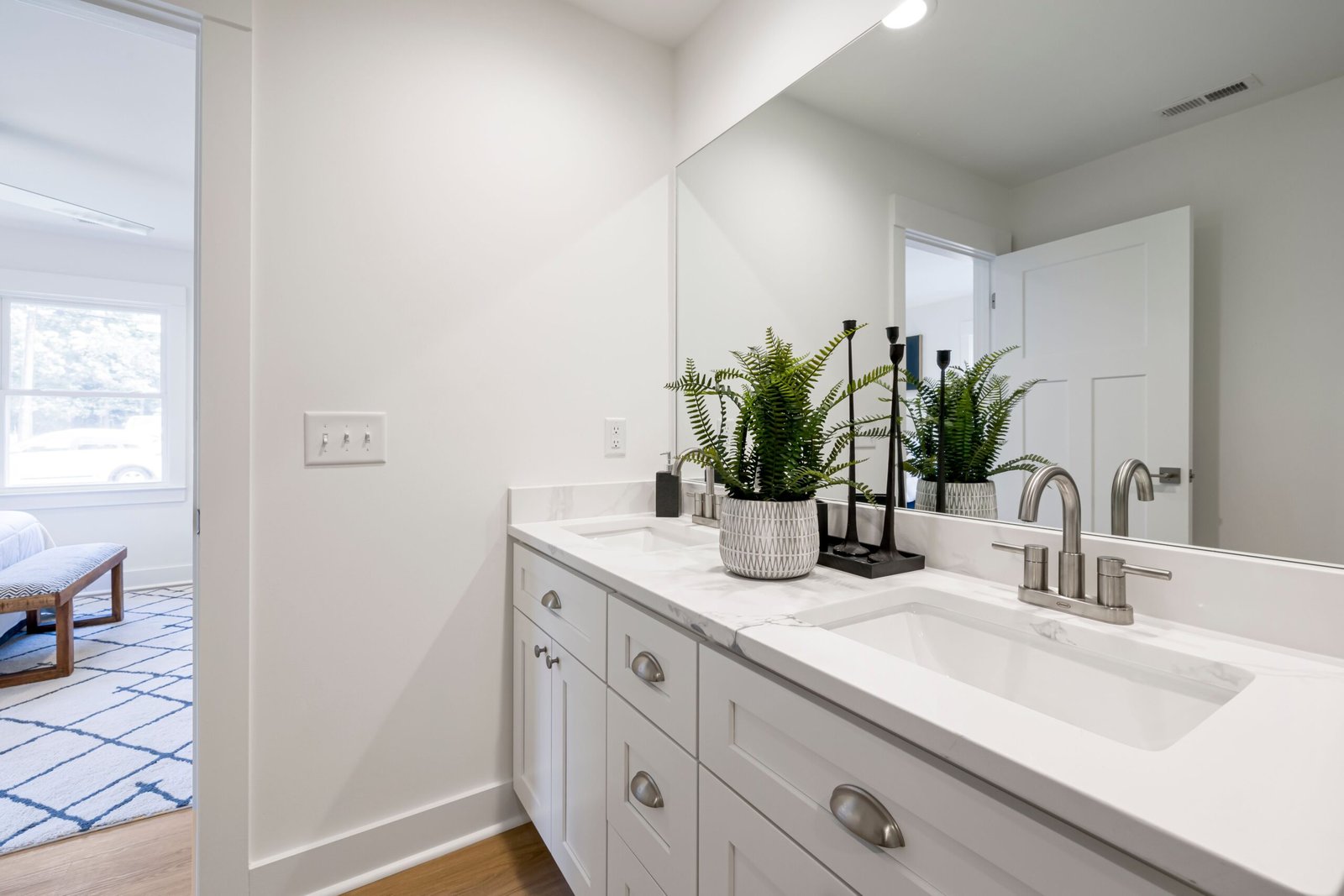
For a Pinterest Pin about bathroom greenery, show where the light enters, what plant is pictured and the actual care considerations. A picture of a fern beside a sink is inspiration, not proof that it will survive in a windowless bathroom. Readers deserve enough information to adapt the idea to their homes. That kind of specificity makes your article more useful than a gallery of attractive but unexplained stock photos.
Frequently asked question
Can a plant survive in a bathroom with no window?
It needs an appropriately installed grow light to receive adequate light consistently.
Keep learning
Explore our Indoor Plants collection and the 10 Best Indoor Plants for Small Apartments guide for more ideas. For general plant placement and care, see Oregon State University Extension.