
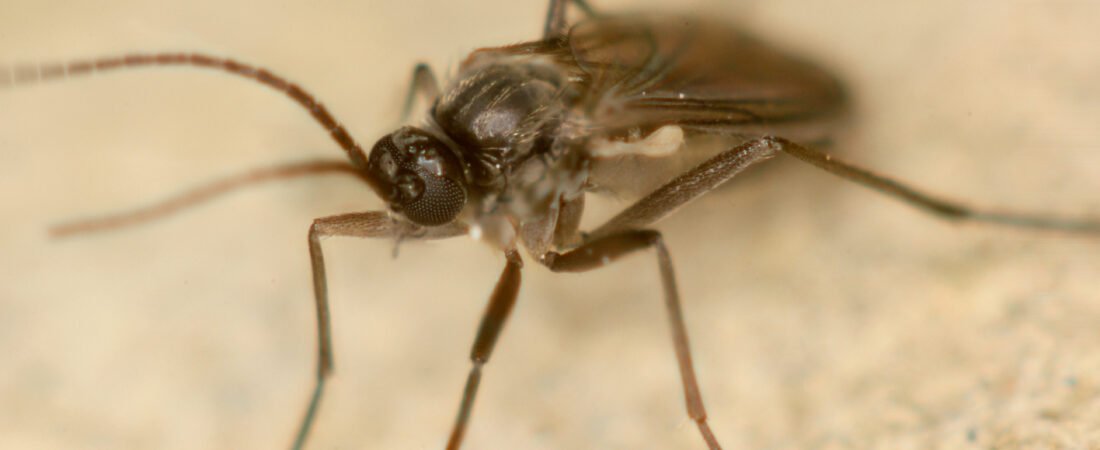
If little flies rise from your houseplant every time you pick up the watering can, start by finding out which pot they come from. Fungus gnats spend part of their lives in the growing mix, so catching the flies at the window solves only part of the problem. Here’s how to find the source and deal with it without drying out a plant that needs moisture.
Find the pot where the flies are breeding
Watch what happens when you move the container a little. Small, dark, long-legged flies that run across the mix or flutter up from the rim are a clue. Look at the other end of the room too. Flies gathering over a fruit bowl may have a different source, even if the nearest windowsill holds several plants. Before treating anything, lift each nursery pot out of its decorative cover. A dry-looking surface can hide a puddle beneath the pot. Note where you see flies emerging and which containers feel unusually heavy for their size.
If you want a closer look, lay a small slice of raw potato on the surface of a suspect pot. Check the underside for slender, pale larvae with dark heads, then remove the slice. Finding larvae helps pinpoint a breeding site. An empty slice tells you less, so consider it alongside your observations of the adults. A healthy mature houseplant with a few flies around it usually gives you time to investigate. Pay closer attention to seedlings, whose small root systems leave them more vulnerable to feeding damage.
Confirm the insects rather than treating every flying pest the same way. Fungus gnats tend to hover near potting mix; fruit flies are more often around produce or drains.
Bring fungus gnats under control in five steps
Start with the plant that produced the most flies when you disturbed it. You can usually leave it in its present container while you work out what keeps the surface wet. Set aside a place where you can lift it, inspect its drainage and return it to the same light. If several plants share a trough or drip tray, work out whether water from one runs into another. The five steps below address the growing conditions, the adult flies you can see and the young stages developing out of sight.
1. Reduce excess moisture
For species that tolerate it, let the upper layer of mix dry appropriately between waterings. Do not dehydrate moisture-loving plants to eliminate the insects.
Try lifting the container immediately after the next genuinely necessary watering, then again as it dries. The difference gives you a reference for that particular pot. If the cover pot is too deep to see inside easily, take the nursery pot to the sink to drain and empty the cover before putting it back. A layer of dry mix sprinkled over a saturated root ball can disguise the moisture without fixing the cause.
2. Catch some adults
Use yellow sticky traps near the pot to monitor and reduce adult numbers. Keep traps out of reach of pets and children.
Position the adhesive just above the surface where flies are active. Leave enough clearance to lift the plant out for watering without brushing a leaf against the card. In a cramped shelf arrangement, trim an unused card only if its instructions allow it, or move the pot somewhere you can fit the trap safely. If you have young children or curious animals, choose a monitoring position they cannot reach.
3. Target larvae if necessary
Products containing Bacillus thuringiensis israelensis (Bti) may be labeled for fungus gnat larvae in some regions. Follow the local product label exactly.
Read the intended use before opening a treatment. A product designed for standing water may have different instructions from one labelled for potting media. Check that the label covers the growing site, the target insect and, where relevant, edible plants. Follow its directions for application and repeat timing. An adult landing on the pot the following morning cannot tell you whether a larval treatment has worked.
4. Check surrounding containers
Infestations can persist when neighboring pots stay wet. Inspect recently purchased plants and any stored open potting mix.
Look beyond the biggest plant. A tray of cuttings, a bag of moist mix tucked under a bench or a recently watered seed tray can be easy to miss. Work across the shelf in one direction so that every container gets checked. Close bags of potting mix after use and clear up spilled material, especially where water collects underneath a shelf.
5. Prevent recurrence
Use draining pots, avoid chronic overwatering and remove decaying plant debris. Give treatments time to affect successive insect generations.
When a plant needs moving into a larger pot for horticultural reasons, choose one suited to its root ball and use a mix appropriate to the species. Excess unused wet mix can take a long time to dry indoors. Between potting jobs, a simpler change may be enough. Move a plant out of a shared tray before watering its thirsty neighbour and put it back once the neighbour has drained.
Skip improvised soil drenches
A houseplant that starts wilting while flies are present needs a root and watering check before it needs a treatment. A pot left standing in water can contain both stressed roots and gnat larvae. Pouring another liquid through it because the plant looks limp can make the original problem worse. Lift the pot and inspect the drainage holes first. Check whether the root ball feels wet below the surface, and whether the water from the last irrigation had anywhere to go. Keep household cleaners, concentrated oils and improvised chemical mixtures away from the mix. An instruction meant for cleaning a hard surface gives you no basis for applying that substance to living roots.
Spraying random household chemicals onto potting soil is not a safe shortcut. Use only products labeled for the intended pests and application site.
Keep a short record for each affected pot
Write the plant name and date on a card, or take a quick photograph of the pot and its trap. At the next check, compare the number of fresh catches, how heavy the pot feels and the moisture below the surface. A note such as “fern still damp on Friday, three new flies” gives you more to work with than a reminder that simply says “water plants.” Give each container its own entry. A small pot near a warm window can be ready for water while a large one across the room still feels much as it did several days ago.
Read the pattern on a yellow sticky card
A card beside the kitchen window may catch flies from several places. For a more useful comparison, put a card beside the mix in each suspect container and write the starting date on the clean margin. Look at new catches over similar intervals. A card left out for a month can look alarming even when activity has slowed considerably. If one pot keeps producing fresh catches while the others quiet down, concentrate your next inspection there. Check the saucer, folded leaves resting on the mix and any neighbouring propagation pots that you may have overlooked.
Optional product: 36-pack yellow sticky traps for fungus gnats and other small flying insects. This is a specific product listing, not a general pest-control store page. Paid Amazon affiliate link; as an Amazon Associate I earn from qualifying purchases. Read our affiliate disclosure.
For more help, see how to tell when houseplants need water and the University of Minnesota Extension guide to houseplant insects.
What to do before reaching for cinnamon
If a dusting of cinnamon has already disappeared into the surface, you can still start with a clean observation. Remove any loose debris, note the date and check where adults gather over the next few days. There is no reliable household dose of kitchen cinnamon to recommend for this job. Adding more because a fly appeared today gives you little information about what is happening below the surface. If the plant needs consistently moist conditions, focus on removing standing water, monitoring adults and checking whether a locally labelled larval treatment suits the plant and growing site.
Match the next watering to the plant
Once catches fall, use what you learned about the individual pots to decide which ones to check first. For example, keep a moisture-loving fern on a different inspection schedule from a succulent on the same shelf. If you share plant care with someone else, leave a note showing which pots were actually watered. Two people can each water sparingly and still keep a container wet between them. For a new plant, make room to inspect the pot and saucer separately before it joins the group. The care guides below can help you work out what normal drying looks like for the plants you own.
Read more in our Plant Care section and indoor plant care for beginners. For identification and basic houseplant care, consult Oregon State University Extension.
Image credit: Andy Murray · Original photograph · CC BY-SA 2.0. The website may crop the image to fit its featured-image layout.