
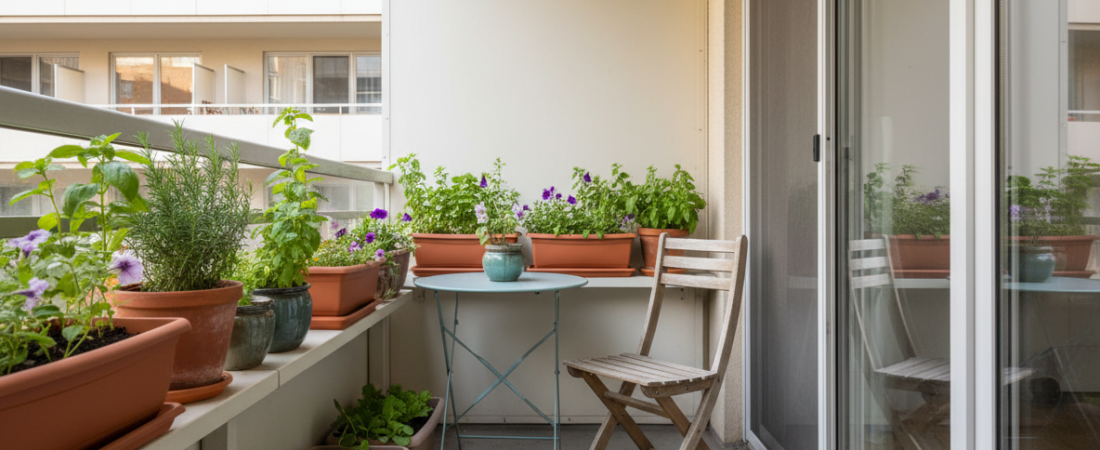
A balcony should still feel like a place to relax. A practical layout keeps seating, doors, and walking space usable while making room for a few well-placed plants.
Plan before you plant
Measure the balcony width, door swing and railing clearance. Note where sunlight reaches in the morning and afternoon and confirm your building’s rules before buying planters.
Practical balcony gardening steps
1. Use one main growing zone
Group containers along one approved edge rather than scattering small pots across the floor. This creates a clear path and makes watering easier.
2. Choose narrow furniture
A folding chair or slim bench preserves more usable space than a deep outdoor sofa. Measure the furniture with a person sitting in it, not just the empty footprint.
3. Build vertical layers safely
Use freestanding, weather-resistant shelving on a level surface if permitted. Secure it as instructed; avoid unsecured tall racks that could tip during wind.
4. Keep weight in mind
Wet potting mix, plants and large ceramic pots add substantial weight. Follow balcony load restrictions and ask building management before installing heavy groupings.
5. Plan drainage and privacy
Use saucers where needed and never allow water to drip onto neighbors. Position foliage for screening without attaching anything to shared railings against the rules.
Mistake to avoid
A crowded display may photograph beautifully but become unsafe and difficult to maintain. Never block the exit or build over the railing.
Your next small step
Put your chair in position first and check that the balcony door still opens fully. Mark the remaining growing zone with removable tape before purchasing a planter.
Three small-balcony layouts you can sketch before buying
A balcony feels crowded when containers block the door, seating or a safe path to the railing for maintenance. Plan the route people need to walk through first, then use the remaining footprint for plants.
Sketch the space from above and mark the door swing, any drain, wall-mounted fixtures and restrictions imposed by the building. Measure everything, including the width of a chair when someone sits in it.
- One-wall line: place a few stable pots along one approved wall and keep the central walking zone clear. Good for narrow balconies.
- Corner grouping: cluster planters at one end and reserve the opposite end for a compact chair. Avoid creating a hidden damp corner that is difficult to clean.
- Low plus vertical: combine floor pots with a modest freestanding plant stand only if its full wet weight and stability suit the site. Tall shelves may require anchoring.
- Watering route: ensure each pot can be reached without leaning over a railing or moving heavy containers repeatedly.
- Safety check: keep emergency exits and building drainage unobstructed. Never assume a decorative screen is allowed by the landlord.
Try a tape layout: use removable painter’s tape or paper cutouts to represent each pot and the chair before purchasing. If you cannot open the door and walk naturally, reduce the number of containers. See balcony planter privacy ideas and no-drill gardening.
Measure the space a person uses, not just the empty floor
A balcony can seem roomy until a chair is pulled out and someone walks through the door. Measure the width and depth, then mark the full swing of the door, the position of drains and the space required to reach any equipment that needs maintenance. Put your existing chair in place if you have one. Sit down, extend your legs and check whether another person can pass safely. That tells you where the planting zone should end.
Make a quick sketch on paper with the door and any fixed structures drawn first. Add the chair next, followed by a narrow path that stays clear. Only then draw in the plant pots. This order may feel backward if you started with a Pinterest picture full of flowers, but it stops you buying a planter that blocks the one place you wanted to relax. Leave additional room for foliage to grow rather than measuring every plant at its current size.
Layout one: the single-edge garden
For a long, narrow balcony, line up two or three suitable containers along one permitted wall or edge. Keep the opposite side clear for a compact chair and a small table. Choose plants of different heights, such as a medium upright herb, a low flowering plant and a trailing plant that remains within the balcony boundaries. It looks more considered than ten pots scattered across the floor, and you can water the group without walking around furniture.
Choose a folding chair if the space must serve several purposes. A chair that folds away leaves room to tend the plants or sweep the floor, while a large cushioned armchair may dominate the layout even when nobody is sitting in it. Before buying, check the chair dimensions while open and with a person seated. This is especially important on a narrow balcony where the difference between an easy route and a cramped squeeze may be only a few centimeters.
Layout two: a corner garden beside a seat
An L-shaped arrangement works well when one corner gets the best light. Put a larger, stable planter against the wall and a smaller one beside it to create a green frame behind a chair. Choose plants with light requirements suited to that exact corner; a sunny herb will not thrive simply because it looks appealing next to a shade-loving fern. Leave access between containers so you can check soil and empty drainage trays without shifting the furniture every few days.
Keep your visual palette simple. Two container finishes, such as dark charcoal and warm terracotta, are plenty. Repeat one leaf color and vary the shape of the plants instead. A broad-leaved plant next to fine foliage creates contrast without needing lots of different pots. If you want privacy from a nearby window, place the taller plant on the exposed side, but do not build a continuous heavy barrier without confirming weight and wind restrictions.
Layout three: a compact freestanding plant shelf
When floor space is scarce, a short, stable shelf can hold small pots at different heights. Check that the shelf is rated for outdoor conditions and for the actual weight of wet containers. Keep heavier pots on the lowest level and make sure the structure is used exactly as its manufacturer directs. Strong winds can tip unsecured furniture, so ask your building manager what outdoor racks and anchors are permitted. Never improvise an attachment to shared railings.
Place the shelf where plants still receive suitable light and where runoff cannot damage the building or drip onto neighbors. Avoid covering vents, windows, drains or emergency paths. A plant shelf is most useful when every pot can be reached without climbing or leaning dangerously. If the lower shelves are too dark for growing plants, use those spaces for lightweight gardening supplies only if they are secure, dry and allowed by the building.
Make the layout easier to maintain
Keep a watering can nearby only if it has a safe, tidy place to live. Use draining containers with catch trays where appropriate, and empty any collected water before it overflows. Pots beside a sheltered wall can dry at a different rate from those exposed to wind. Check the growing mix rather than watering the whole group on a fixed schedule. Choose a few plants you can care for consistently before adding flowers just because their colors match the furniture.
Seasonal changes deserve space in the design too. In a cold climate, you may need to bring tender plants indoors or protect empty pots from freeze damage. A bulky outdoor chair that fits comfortably in summer can become a storage problem in winter. Decide in advance whether you have somewhere to keep it. If the balcony receives harsh afternoon sun, consider plant placement and outdoor-safe shade options permitted by your building before purchasing sensitive foliage.
Test the layout before spending more
You can start with a chair you already own, two nursery plants and containers with drainage rather than buying an entire matching furniture set. Invest first in stable, appropriately sized pots and a good growing mix. A washable outdoor cushion or one small lantern-like decoration may add personality, but should never block access or become a wind hazard. Spend money only after the paper layout works and you know which parts of the balcony actually get used.
Test the arrangement with someone actually sitting in the chair. Open the door fully, walk past with the watering can and reach the planter at the far end. If either person has to move furniture, shorten the row of pots or use the corner layout.
Frequently asked question
Can a tiny balcony hold both plants and seating?
Often yes, when pots are grouped compactly and furniture is scaled to the actual dimensions.
More balcony inspiration
Browse our Balcony Gardening section and balcony gardening on a budget guide. For container stability and balcony load considerations, read Illinois Extension’s container-size advice.