
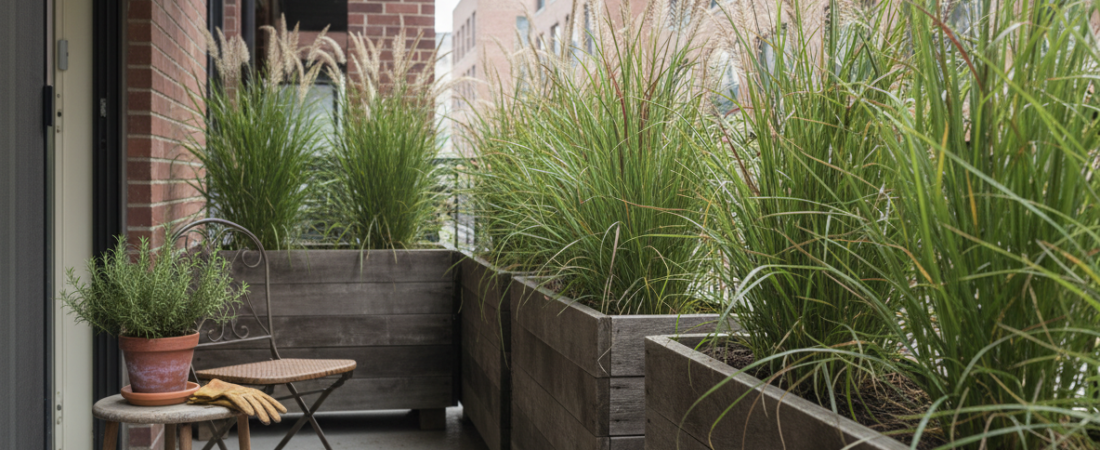
Planters can soften a balcony view and offer partial screening without turning a small outdoor space into a wall of clutter.
Plan before you plant
Decide whether you need eye-level privacy while seated or standing. Check building rules, wind exposure and balcony weight limits before buying tall containers.
Practical balcony gardening steps
1. Use a row of medium containers
Several moderate-height plants may be easier to manage than one oversized pot. Keep them entirely inside approved balcony boundaries.
2. Choose compact upright growth
Clumping ornamental grasses or appropriately sized shrubs can provide screening in suitable climates. Check mature size and winter survival before buying.
3. Consider a freestanding trellis
If allowed, support a manageable annual vine in a stable planter. Avoid attaching a trellis to a railing or exterior wall without approval.
4. Leave openings for airflow
An impermeable screen can catch wind and create turbulence. A partially open arrangement is often more practical and easier to maintain.
5. Protect sightlines and exits
Do not block doors, neighboring views that the building protects, or access needed for maintenance. Keep watering runoff contained.
Mistake to avoid
Do not overload a balcony with wet soil in the pursuit of privacy. A few appropriately sized containers are safer than a heavy continuous barrier.
Your next small step
Check the view from your favorite seat first. Mark the intended planter positions on the floor and make sure you can still walk freely between the door and railing.
Privacy screening without an unsafe wall of planters
For a small balcony, privacy is usually needed at one particular sightline rather than across the entire railing. Before buying tall planters, sit in the chair you actually use and identify which direction needs screening.
Estimate the combined weight of containers when saturated, not just empty product weight. Heavy, top-heavy arrangements can be especially unsafe in windy buildings.
- Seated privacy: medium-height foliage grouped near the sitting area may be enough; you may not need a tall hedge effect.
- Standing privacy: requires taller growth and more stability. Check building limits and consider whether a compliant existing railing screen is more appropriate.
- Plant species: choose growth habits suited to the sun, wind and winter exposure instead of purchasing the tallest shrub available.
- Drainage and neighbors: use trays or another compliant runoff solution without letting roots sit in standing water.
- Safety: don’t attach structures to railings or walls without written approval; keep fire exits and sightlines required by the building open.
Low-cost test: use cardboard or a lightweight mock-up to check the sightline from your seat before spending on multiple tall planters. Compare balcony layout options and wind exposure considerations before purchasing.
Start with the view you actually want to block
Privacy is more useful when it solves a specific problem. Sit in the chair where you usually have coffee and look towards the nearby windows, shared walkway or opposite balcony. Is the exposed area directly ahead, or only on one side? Put a temporary marker on the floor where a planter might go, then check the sightline again while standing. Many small balconies need only one short screen beside a seat, not a complete green wall around every edge.
Measure the available floor space before buying anything tall. Leave a comfortable path to the door, keep drains accessible and remember that leaves will eventually spread beyond the planter’s footprint. If you rent, check the building rules for acceptable plant heights, free-standing structures and railing attachments. Check the proposed position from inside the apartment as well as from the seat.
Four planter arrangements to try
A pair of medium planters at one end of a balcony can soften a direct view without boxing you in. Choose upright plants that grow to a manageable height in your climate and keep their bases entirely within the permitted balcony area. Placing two plants slightly apart often looks more natural than pushing them tightly together. Try the arrangement first with empty pots or lightweight boxes so you can see how it affects light, seating and airflow.
For a narrow balcony, a long, stable trough may create a more cohesive line than several mismatched pots, but wet soil and mature plants can make it heavy. Confirm the balcony’s permitted loading with your building management rather than calculating a safe load from appearance alone. Avoid placing a substantial trough on an unsupported shelf or railing. If the weight is uncertain, choose fewer and smaller containers, or reconsider whether a plant screen is the right solution.
An L-shaped arrangement is useful for a corner seat. Place one taller container behind the chair and a shorter pot along the exposed side, leaving the floor in front open. The greenery frames the seating area rather than blocking the whole balcony. This works especially well when you use one dominant leaf color and repeat the same container finish. The smaller pot can hold seasonal flowers while the taller plant provides the main visual screen.
If your building permits it, a compact freestanding trellis within a sturdy, appropriately weighted planter can support a light annual climber. Check the combined weight, wind exposure and whether the structure requires attachment before using it. A trellis that seems steady on a calm day may behave very differently in a storm. Never tie a screen to a railing or façade without permission, and avoid vines that can damage building surfaces.
Plants that can provide screening without taking over
Clumping ornamental grasses create movement and a soft boundary, but choose a species and mature height suited to your local weather. Some grasses go dormant or need cutting back, which may leave very little privacy in winter. Compact shrubs may hold their shape longer, yet they require adequate root space and can become heavy. Check hardiness specifically for outdoor containers, because roots in exposed pots face colder conditions than roots in the ground.
For a lighter summer look, consider a few large-leaf annuals or well-supported climbing plants where sunlight permits. An edible climbing vine may also provide shade and greenery, but it will need enough light, regular feeding and an appropriately secure support. Ivy and other vigorous vines can be difficult to manage or invasive in some areas, so verify local recommendations rather than automatically choosing the fastest-growing plant. A good screen is one you can keep healthy and controlled.
Keep the foliage easy to reach for pruning and pest checks. A wall of crowded plants can block airflow and make it difficult to spot insects or remove dead leaves. If a plant eventually outgrows its place, move it into a more suitable arrangement rather than continually squeezing it behind the furniture. You want the view to feel softer, not the balcony to become another maintenance problem.
Privacy that still feels open and comfortable
Partial screening often feels better than a solid barrier. Leave a little space between containers so air can move through, and preserve the views you actually enjoy. If the neighbouring building is only visible from one angle, screen that angle and keep the rest of the railing clear. A small outdoor rug or cushion can add comfort without making the privacy screen taller. Plan the seating first so the plants support how you use the space.
Think about light as well. An oversized planter in front of a window may darken the room behind it or shade the plants that need sun. Place sun-loving plants at the brighter edge and shade-tolerant foliage in the sheltered corner, provided both locations are safe. Check the arrangement at different times of day before buying a whole row of matching greenery. The most useful design is one that works on an ordinary Tuesday, not only in a styled photograph.
Water, wind and winter: the practical details
Watering runoff needs somewhere to go. Use containers with proper drainage and suitable catch trays where allowed, and empty standing water so it does not spill onto neighbors below. Be aware that a full tray may overflow in heavy rain. Check your plants and supports after windy weather, but stay away from unstable structures until conditions are safe. Keep emergency routes and maintenance access completely clear at all times.
In cold climates, a tall leafy screen may disappear for several months. Decide whether you need privacy year-round or mainly while sitting outside in summer. Tender annuals can work for seasonal screening, while a truly year-round planting requires species that tolerate your local winter and root-zone exposure. Do not assume a shrub is winter-hardy in a balcony container just because its label says it survives in garden soil.
An inexpensive test before you buy
Try the layout for one weekend using empty planters, lightweight boxes or a folded sheet of cardboard at the planned height while you remain safely inside the balcony. Look from your chair and from the doorway, then check whether the mock-up blocks a useful breeze or makes the space feel cramped. Measure the actual floor footprint and compare it with the planter you are considering. This simple trial can save money and prevent an awkward return.
Sit in the chair at the time of day you use it most. Check whether the leaves soften the intended view without blocking the door, then stand and reach each pot as if you were watering. If a seasonal planting loses its leaves in winter, plan for the view to open up again.
Frequently asked question
Which is better for privacy, tall planters or a trellis?
The safest choice depends on building permissions, wind, weight and the height you need screened.
Optional supplies (affiliate links): For balcony privacy, consider the weight of a planter when watered, how much space the base takes up and whether it can stand securely without rail attachments. Veradek Block Span tall privacy planter (paid link); Veradek Block Series long rectangular planter (paid link). As an Amazon Associate I earn from qualifying purchases. Links open Amazon.com; prices and availability may change. Affiliate disclosure.
More balcony inspiration
Browse our Balcony Gardening section and balcony gardening on a budget guide. For container stability and balcony load considerations, read Illinois Extension’s container-size advice.